- Outbound:
- Approaching and exiting King's Hollow Tunnel
- Bear Hollow: 1 | 2
- Approaching and exiting Moonville Tunnel
- Bridge construction! 1 | 2
- Lake Hope
- "Welcome to Lake Hope State Park"
- Activation:
- Inbound:
by William Eric McFadden
From the Moonville Rail Trail website:
-
This 10-mile rail trail takes visitors through the beautiful woodlands of southeast Ohio, including Zaleski State Forest; the communities of Zaleski and Mineral; and the Lake Hope State Park wetland areas. The corridor holds water on both sides of the trail, creating a wetland area that is home to numerous species of flora and fauna.
Additional points of interest along this trail are two unique and historic tunnels. King’s Hollow Tunnel (also known as King Switch Tunnel) is a 120-foot structure carved through the rock and lined by a series of 12x12 wooden beams. The Moonville Tunnel is brick-lined and has a long history of train accidents, earning the tunnel a reputation for being haunted.
From the Lake Hope State Park website:
-
Lake Hope State Park offers a truly relaxing, yet rustic getaway from the high speed of modern life. The entire 2,983-acre park lies within the Zaleski State Forest in the valley of Big Sandy Run. The park's heavily forested region is marked by steep gorges and narrow ridges with remnants of abandoned mining and iron-producing industries.
From the Zaleski State Forest website:
-
The 27,822-acre Zaleski State Forest is the second largest forest in Ohio's system of state forests.
Zaleski State Forest operates the only state-owned sawmill in Ohio. The mill produces rough sawn lumber for use by Ohio’s state forests and state parks as well as other government agencies.
Historic Moonville Tunnel is located within Zaleski State Forest on the Moonville Rail Trail right-of-way.
Pictures
Description
On Saturday, April 11, 2026, one member of the Southeast Ohio Radio Adventure Team performed a successful bicycle-portable simultaneous activation of Lake Hope State Park (US-1968) and Zaleski State Forest (US-5455) in Ohio as part of the Parks on the Air (POTA; link) program.
Eric McFadden, WD8RIF, performed the bicycle-portable two-fer activation of Lake Hope State Park and Zaleski State Forest. This was his first ride on Moonville Rail Trail since 2024 and it was his first ride on Moonville Rail Trail using his new Surly Preamble bicycle.
Starting a couple of hours later than he had originally hoped to, Eric began his bicycle ride at the Moonville Rail Trail trailhead in Mineral, Ohio at 1916 UTC, when the temperature was about 63°. While the Moonville Rail Trail itself is very smooth, the rail trail is still missing two bridges west of Moonville Tunnel, and Eric was forced to detour onto the hilly Hope Moonville gravel road for about a mile before rejoining the Moonville Rail Trail. (The good news is construction of the missing bridges has finally begun and is expected to be complete by October of 2026.) Upon reaching the intersection of Moonville Rail Trail and Wheelabout Road, Eric left the rail trail and rode the short distance on Wheelabout Road and Shea Road to enter Lake Hope State Park. After pausing to admire the view of Lake Hope from atop the recently-rebuilt dam, Eric continued his ride to the main park entrance and then to the state park's sole shelter house, which he was happy to find to be unoccupied. (Eric was able to perform his operation at the shelter house because a new cell tower located just across the lake now provides good cell signal at the shelter house.)
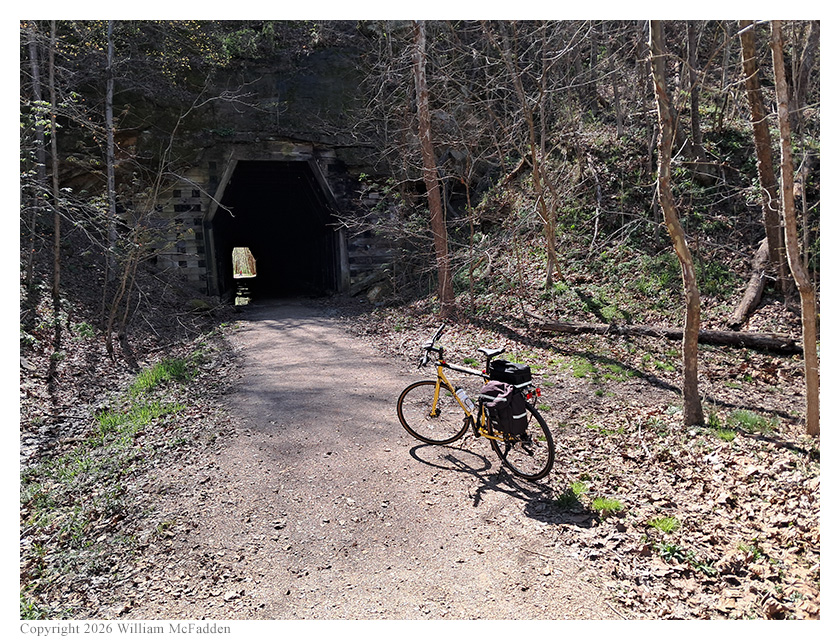
Approaching King's Hollow Tunnel.
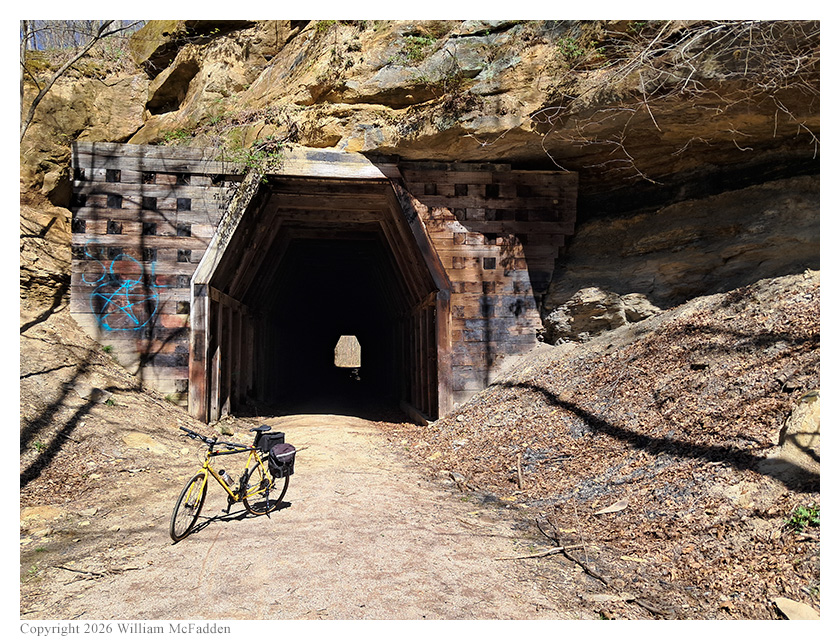
Exiting King's Hollow Tunnel.
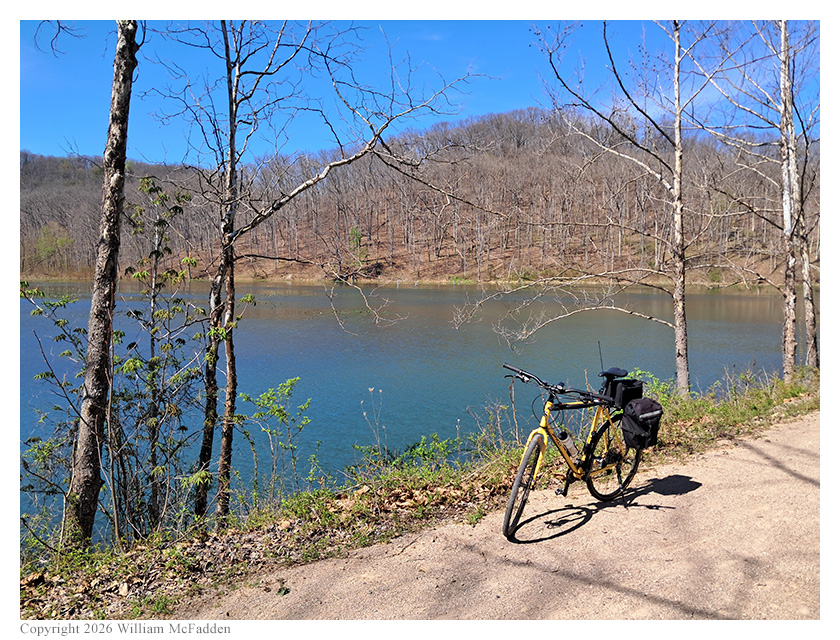
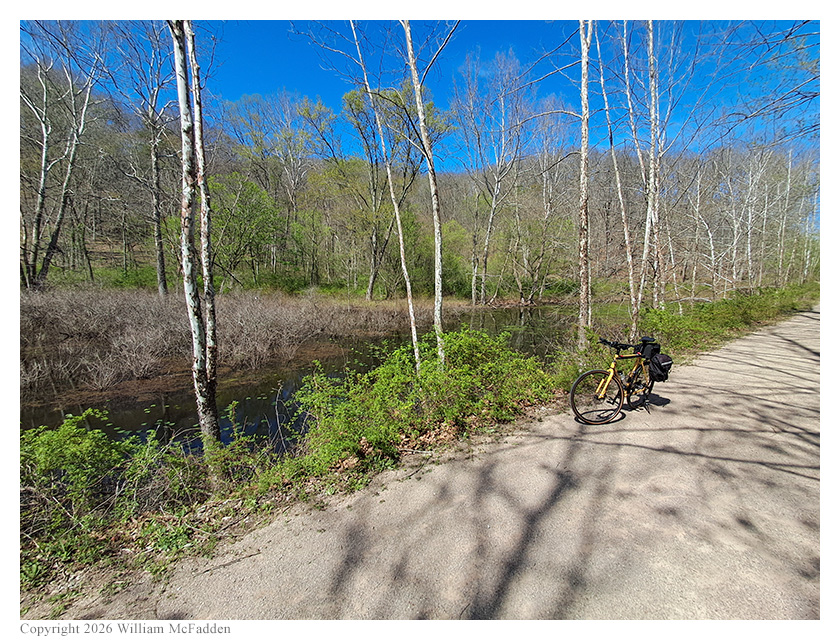
Two views of the lake at Bear Hollow.
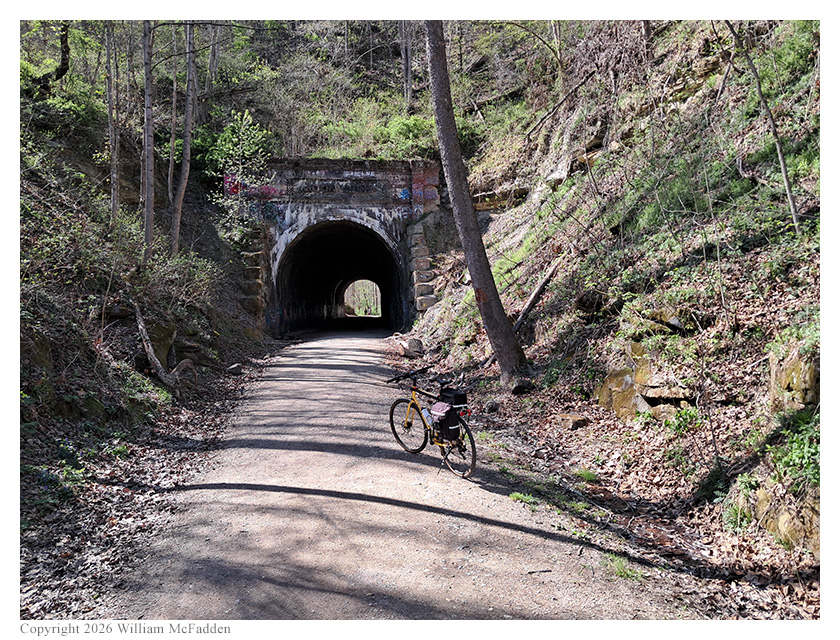
Approaching Moonville Tunnel.
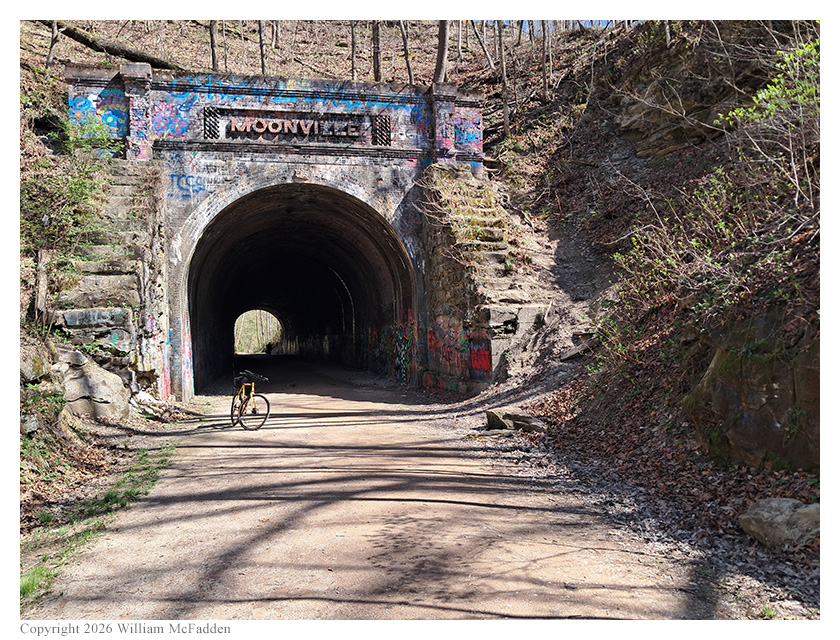
Exiting Moonville Tunnel.
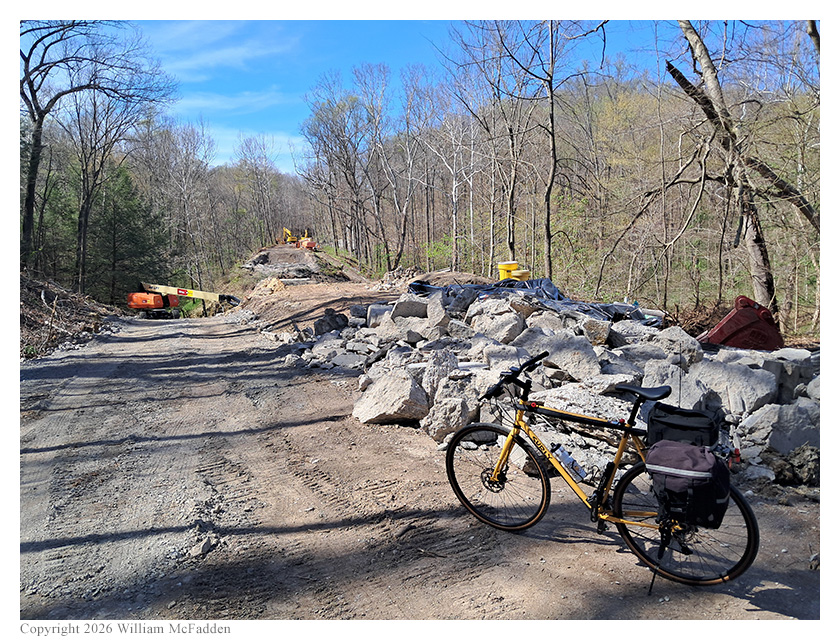
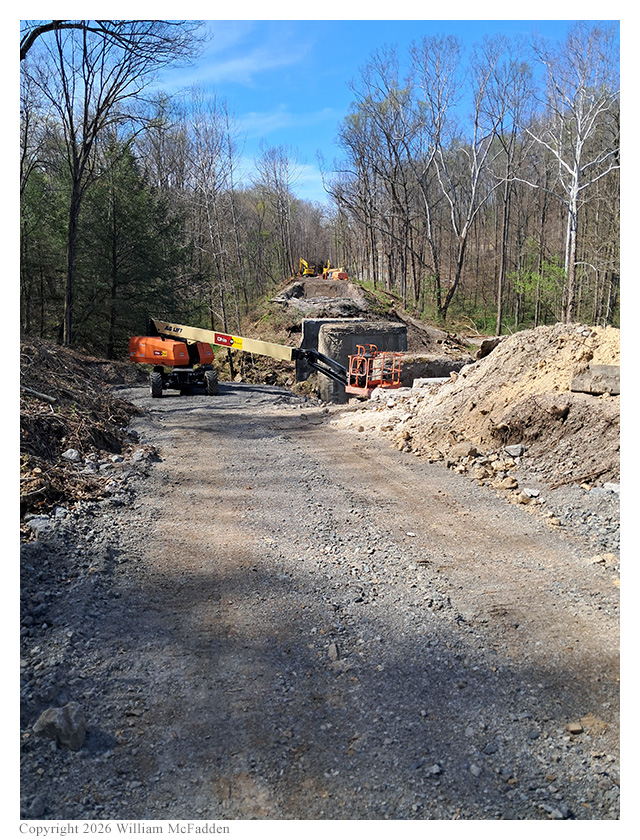
Construction has commenced on
the two missing bridges! This is the
eastern-most of the two missing bridges.
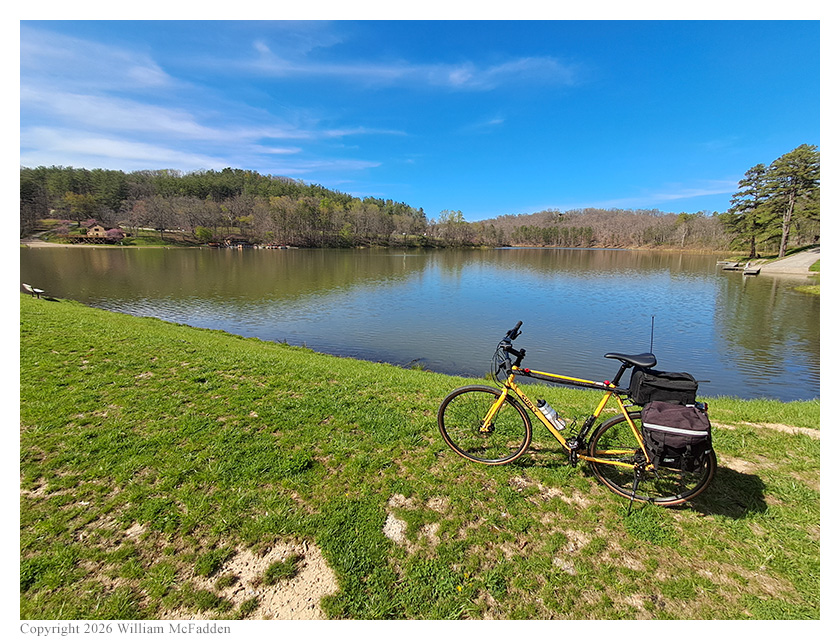
Lake Hope as viewed from the new dam;
strange wide-angle distortion!
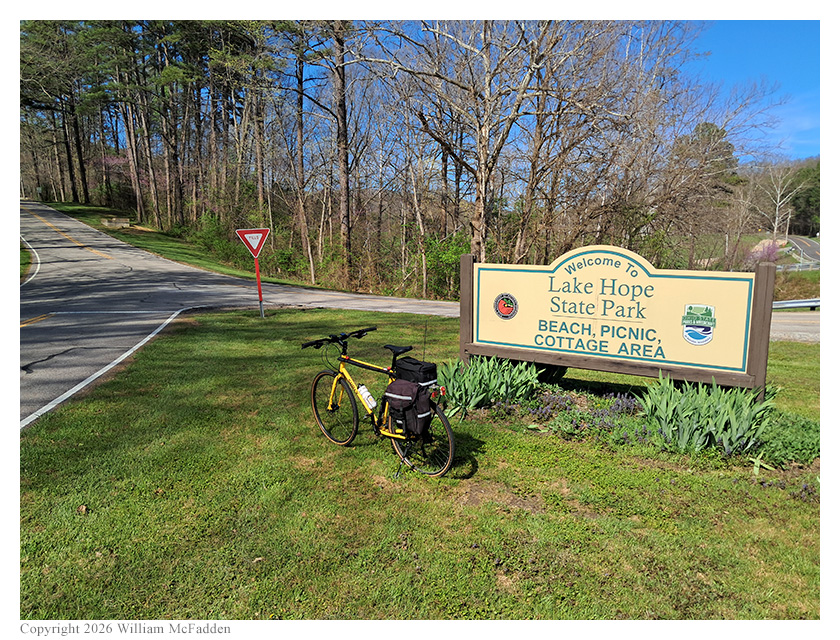
"Welcome to Lake Hope State Park".
Eric arrived at the shelter house at 2017 UTC, finding the it to be entirely unoccupied. For this activation, Eric had brought his KH1 Micro Travel Kit. Eric deployed the KH1 Micro Travel Kit's ad hoc EFRW as a 35' sloper, with the wire supported near the radio end atop one of the shelter's posts, and with the high end supported atop his modified Goture Red Fox Super Hard 720 carbon-fiber mast bungied vertically to his bicycle, placing the single 13' counterpoise directly on the shelter house's concrete floor pointing away from the radiator. Setting up his KH1 on a picnic table, and connecting his external powered speaker and his Whiterook MK-33 paddle, Eric was on the air at 2029 UTC.
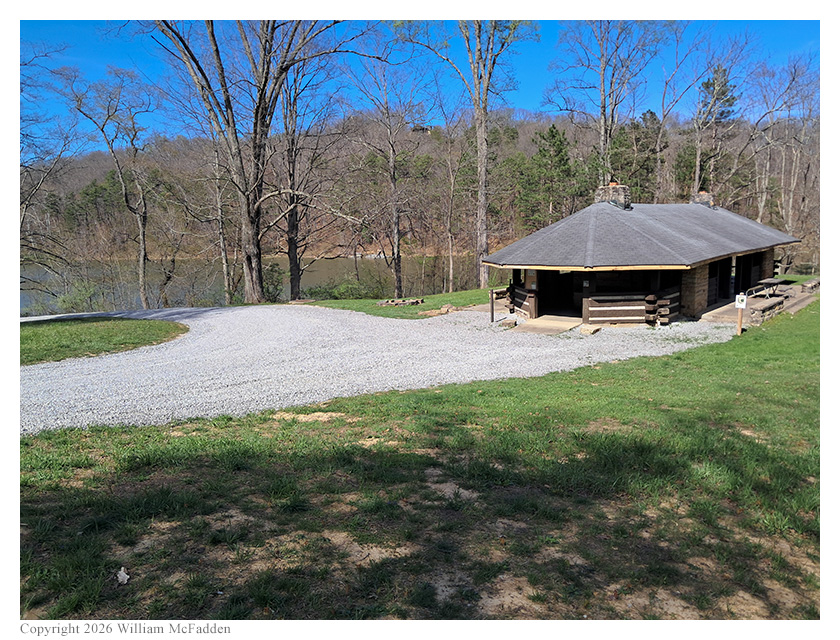
Lake Hope State Park's shelter house.
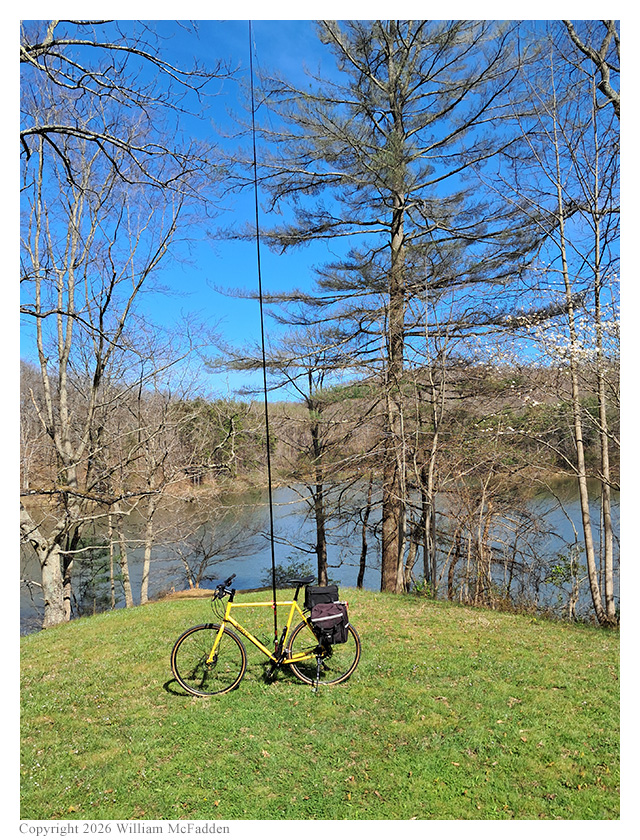
Eric's bicycle-supported mast and antenna.
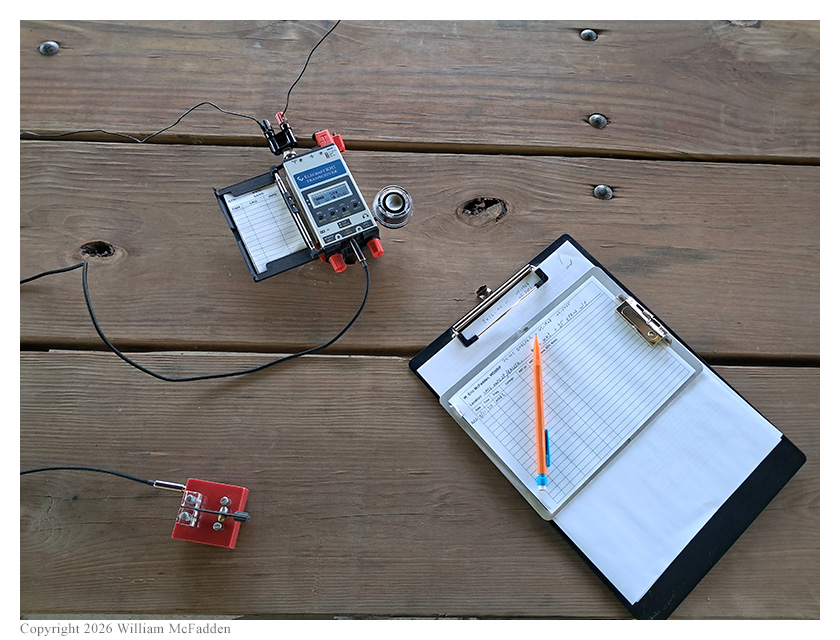
Eric's KH1 station.
As he had expected, Eric had good cell-signal at the shelter house and he would be able to verify that he was auto-spotted on the POTA Spots website (link) and could use POTA Spots to identify possible Park-to-Park (P2P) QSOs.
Eric began his operation on 20m. After finding himself a clear frequency to run, he began calling "CQ POTA" and was auto-spotted on POTA Spots. His first QSO came at 2031 UTC with K4ARQ in Florida. QSOs came quickly, with Eric's eighth QSO coming at 2041 UTC with stalwart hunter AA5UZ in Louisiana. This run included a two-fer P2P QSO with WA1VEI at Canaveral National Seashore (US-0660) and Merritt Island National Wildlife Refuge (US-0249) in Florida; a P2P QSO with KJ5W at Caddo Lake State Park (US-2994) in Texas; and QSOs with operators located in Arkansas, Florida (2), Louisiana, Minnesota, Texas (2), and Washington.
Switching to 30m, Eric found a clear frequency to run, began calling "CQ POTA", and was auto-spotted on POTA Spots. His first QSO in this run came at 2050 UTC with N3DC in Maryland. QSOs came quickly, with his fifth QSO in this run coming at 2056 UTC with N4MQU in North Carolina. This run included QSOs with operators located in Illinois, Maryland (3), and North Carolina.
Switching to 40m, Eric found a clear frequency to run, began calling "CQ POTA", and was auto-spotted on POTA Spots. He made only one QSO on 40m, at 2101 UTC, with AK9A in Wisconsin.
Eric finished his operation by hunting for P2P QSOs and at 2107 UTC he made a P2P QSO on 20m with KF4GAA at Three Forks State Conservation Area (US-8375) in Florida.
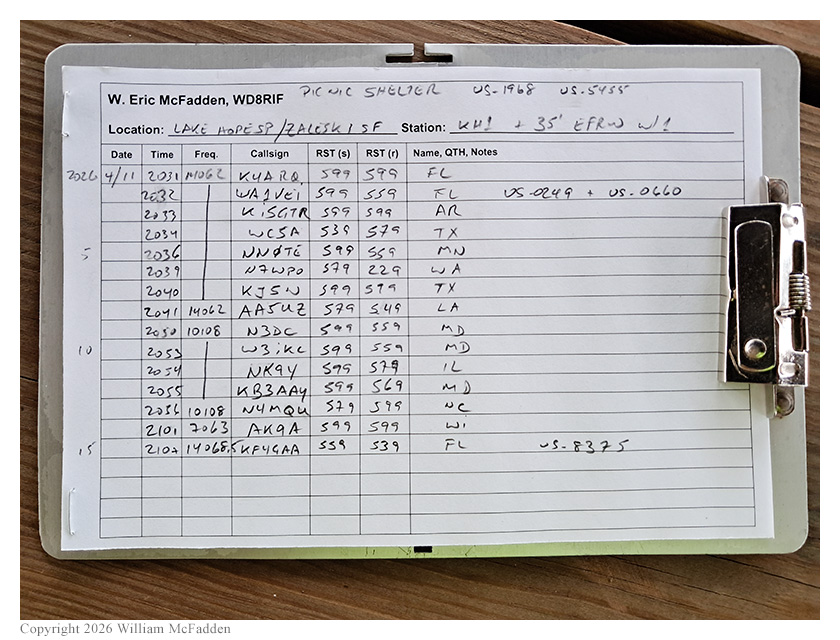
Eric's logsheet.
Following his successful two-fer activation, Eric snapped some more photos, tore down his station, repacked his bicycle, and began his ride back to Mineral via Moonville Rail Trail.
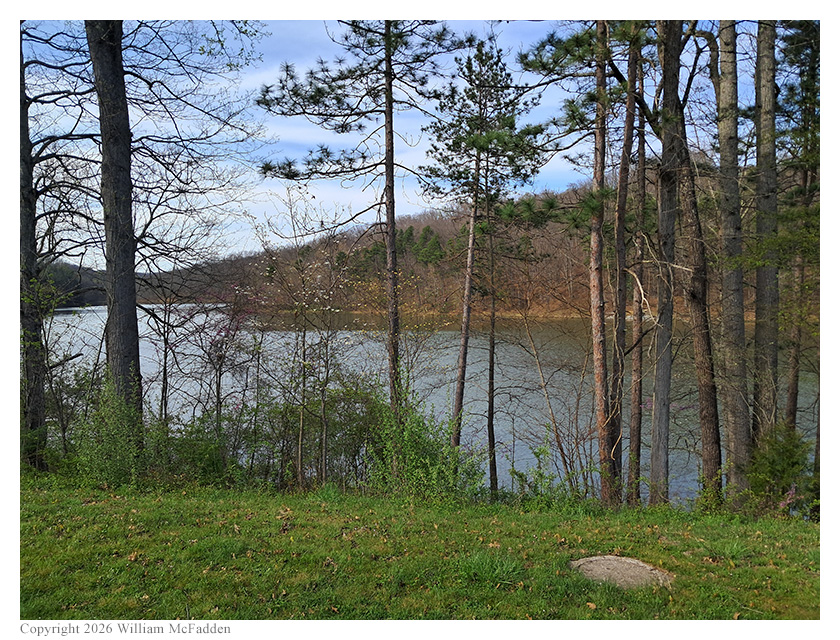
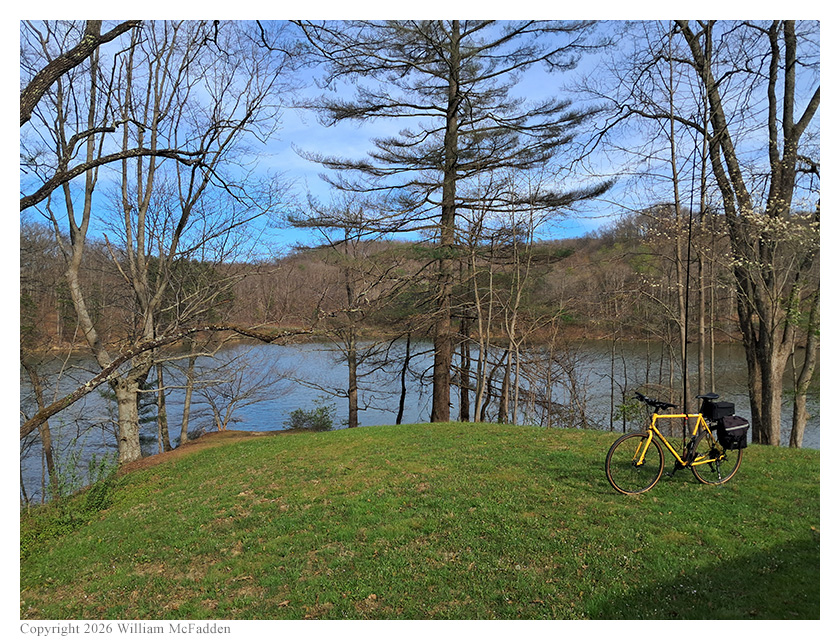
Lake Hope as viewed from the shelter house.
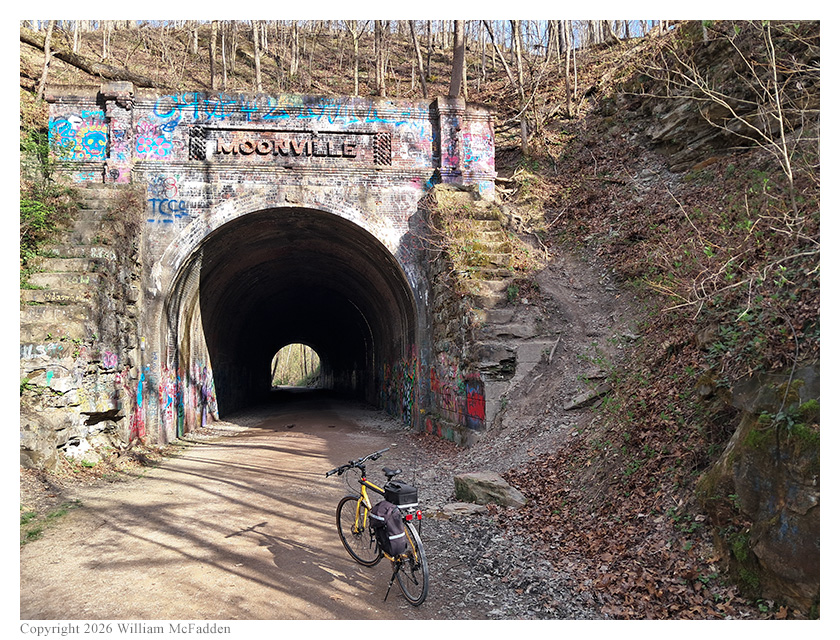
Approaching Moonville Tunnel.
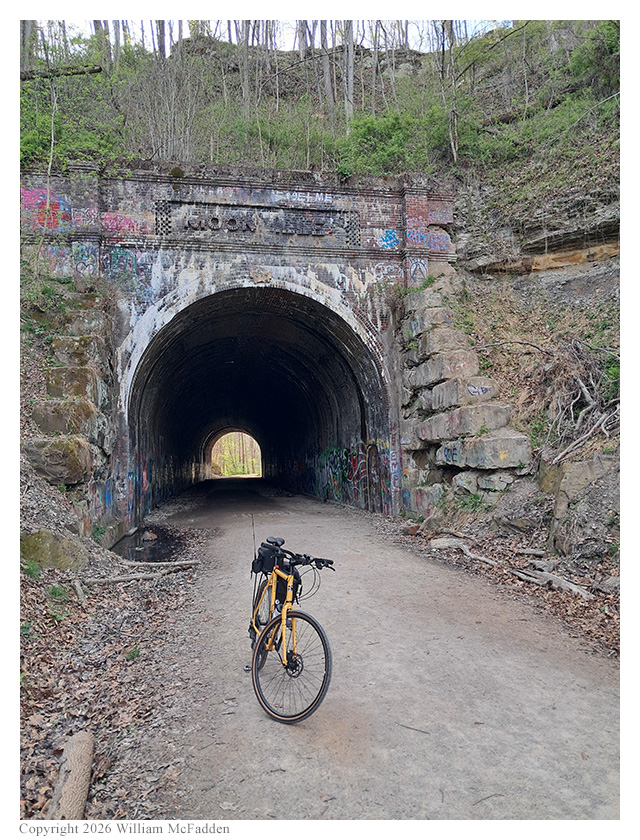
Exiting Moonville Tunnel.
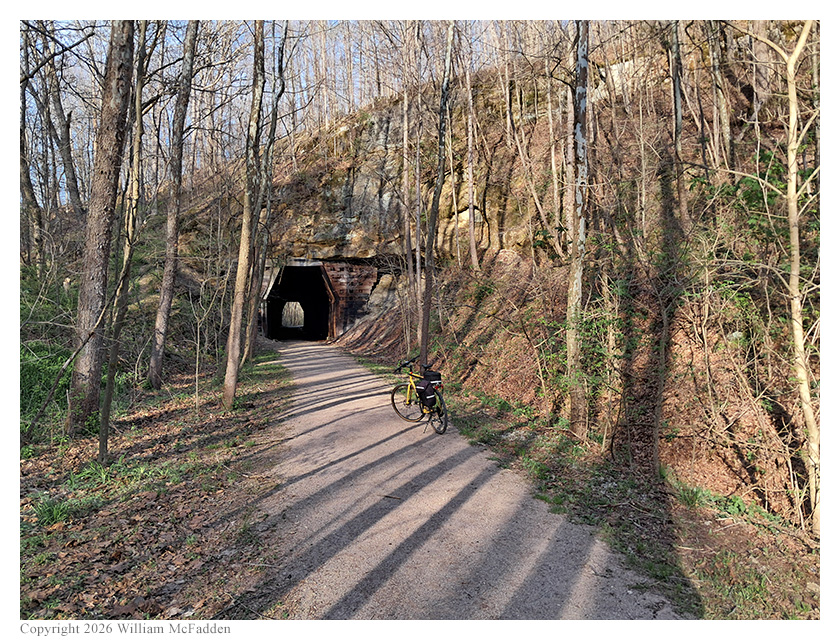
Approaching King's Hollow Tunnel.
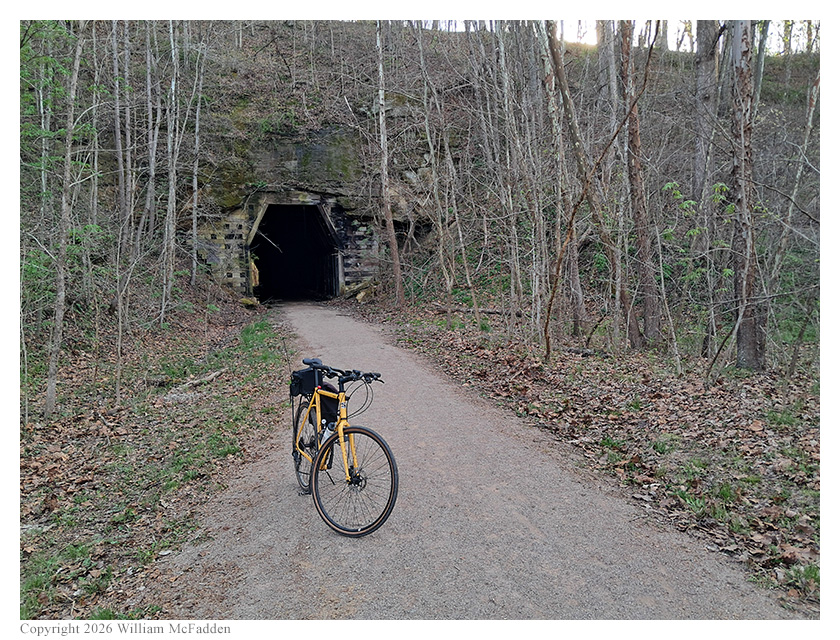
Exiting King's Hollow Tunnel.
In all, Eric completed fifteen QSOs, including four P2P QSOs (counting the two-fer as two QSOs), in about thirty-eight minutes of on-air time. All of Eric's QSOs were CW and were made with a power output of five watts.
Eric was pleased with the performance and comfort provided by his new Surly Preamble bicycle except that, on the one-mile detour on the hilly, loose gravel, Hope Moonville Road, the bike wasn't as stable as he would have liked. Eric suspects either the bicycle's tires aren't as aggressive as those he had been running on his old bicycle, or he was running too much pressure in the tires in order to avoid a pinch-flat. He will explore both possibilities.
As at previous bicycle-portable operations with the KH1 Micro Travel Kit, Eric was quite pleased with how the station traveled, deployed, and performed.
Eric also submitted his log to the World Wide Flora and Fauna in Amateur Radio (WWFF; link) program for an operation at Lake Hope State Park, KFF-1968.
(return)