
by William Eric McFadden
From the park website:
-
Beautiful year-round, the park's breathtaking scenery attracts visitors every season. John Bryan State Park is distinguished by its remarkable limestone gorge, which the Little Miami State and National Scenic River cut many years ago. The gorge, a National Natural Landmark, offers hikers splendid views from the trail. A launch area outside the park provides paddlers with access to the river.
Along with sixteen different hiking trails, including the popular Storybook Trail, the park has a public rock climbing and rappelling area and miles of mountain bike trails. Clifton Gorge State Nature Preserve, adjacent to the park, offers additional hiking opportunities.
Day-use visitors will enjoy the scenic picnic areas and playground. A reservable day lodge is great for group gatherings. The family-friendly campground is perfect for overnight guests who enjoy semi-rustic surroundings.
Pictures
- The Lower Shelter
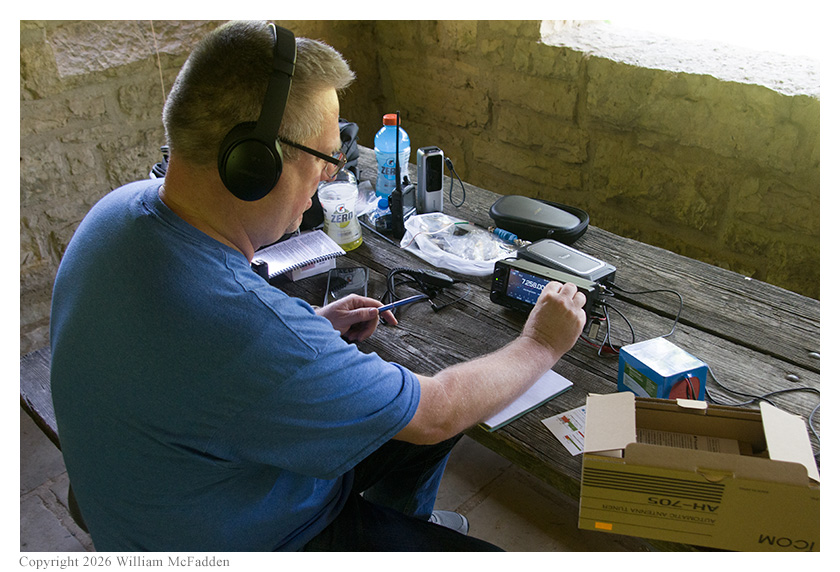
- WD8RIF's KX2 station
- WD9GCO reads to the HRWB gang
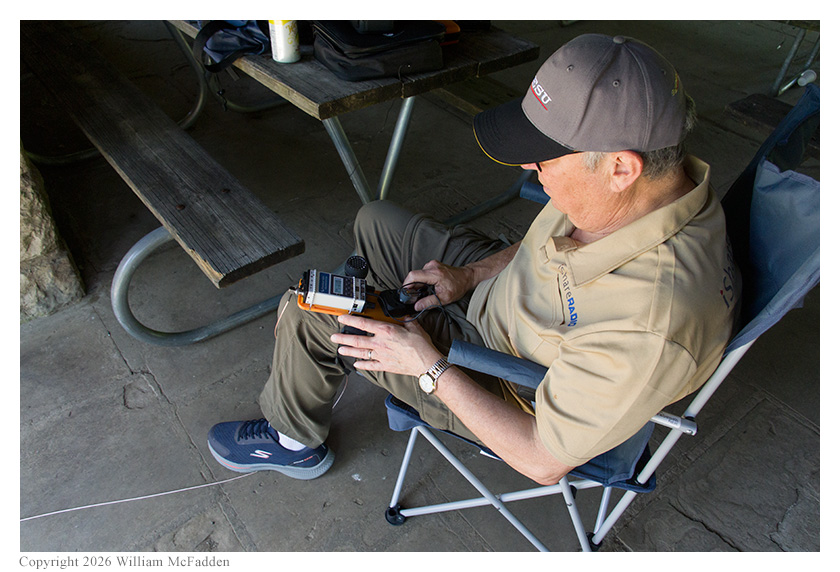
- KJ6VU's KH1 station
- WD9GCO operates: 1 | 2
- KD6KPC operates
- W8VQ's usDX SDR station
- W8VQ operates
- N7AKG operates KJ6VU's KH1
- N7CQR and N7AKG operate KJ6VU's KH1
- K4SWL shows KJ6VU a Penntek TR-45L transceiver
- KJ6VU tests a tiny paddle
- N6MTS operates his mcHF transceiver
- WD8RIF holds KJ6VU's Quansheng 2m/70cm CW transceiver
- N7CQR operates KJ6VU's KH1
- K4SWL operates N6MTS's mcHF transceiver
Description
On Monday, May 18, 2026, two members of the Southeast Ohio Radio Adventure Team performed successful activations of John Bryan State Park in Ohio as part of the Parks on the Air (POTA; link) program.
Following a very long weekend participating in Four Days in May (FDIM, info) and Hamvention (info), Eric McFadden, WD8RIF, and Thomas Witherspoon, K4SWL, participated in the Ham Radio Workbench and Friends group activation of John Bryan State Park. The Ham Radio Workbench gang consisted of George Zafiropoulos, KJ6VU; Mark Smith, N6MTS; Paul Braun, WD9GCO; and Thomas Witherspoon, K4SWL. The Ham Radio Workbench gang was joined by Eric McFadden, WD8RIF; Len Touth, W8VQ; Josh Higgins, K7OSH; Dan Presley, N7CQR; Alan Gordon, N7AKG; and Garrett Dow, KD6KPC.
Most of the group had breakfast together at a local "First Watch" breakfast/brunch/lunch restaurant before heading over to John Bryan State Park, where George had reserved the Lower Shelter for the group event.
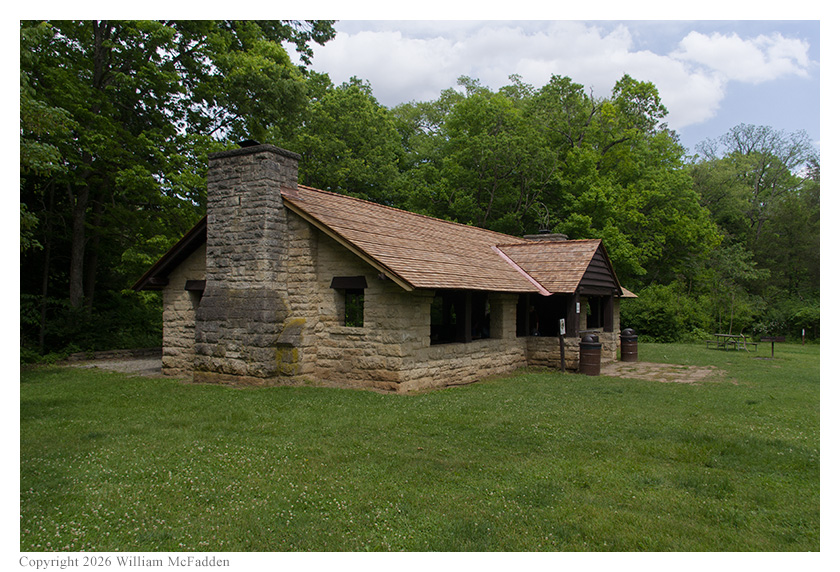
The New Deal era "Lower Shelter".
By the time Eric, Thomas, and Len arrived, several others had already claimed tables within the shelter. Eric and Len each staked out a table and began to set up their stations. Len deployed a 40m end-fed halfwave as a sloper into a nearby tree and set up his usDX SDR transceiver with external ATU, external keyer, and external power. Eric deployed his Tufteln (link) as a 29' sloper to the top of his Goture Red Fox Super Hard 720 carbon-fiber mast on a spike, placing two 17' counterpoise wires directly on the ground, and set up his Elecraft KX2 on his picnic table. Thomas chose not to immediately set up his station, choosing to wait until the others had completed their activations.
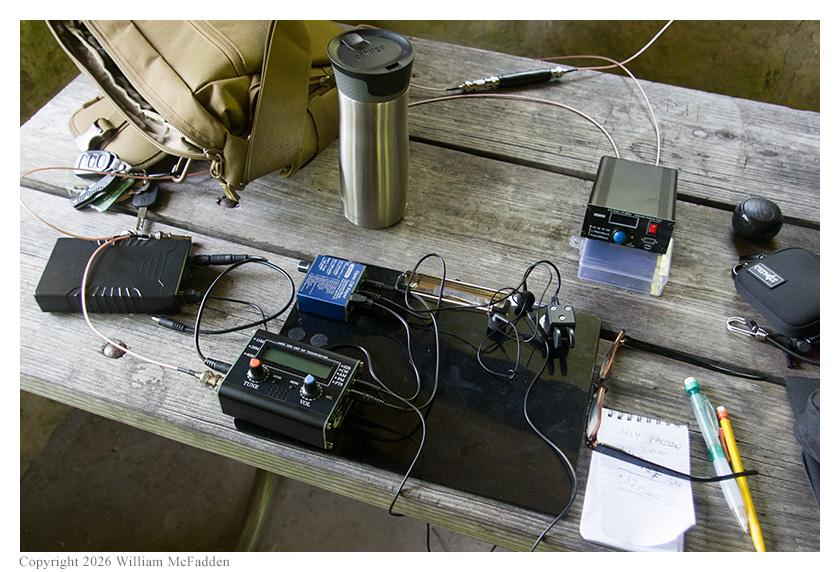
Len's usDX SDR station.
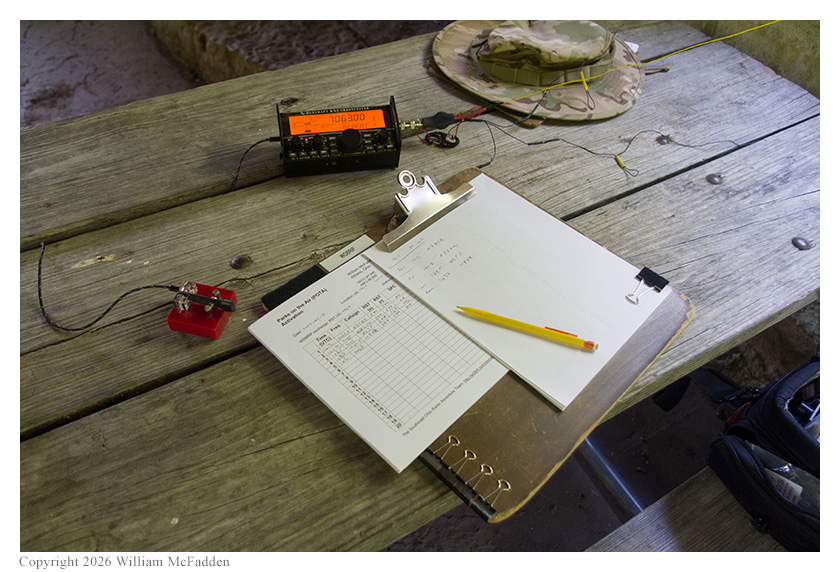
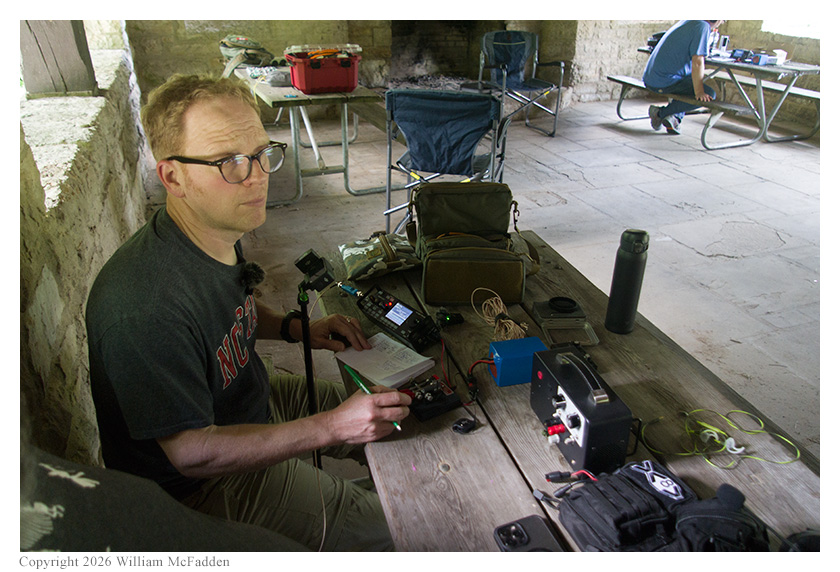
Eric's Elecraft KX2 station.
Cell-signal was very weak at Lower Shelter, so weak it was very challenging to access POTA Spots (link) for self-spotting or to identify Park-to-Park (P2P) QSO opportunities.
Initially, Eric concentrated on making P2P QSOs with the other local operators. At 1612 UTC, he made a P2P QSO on 20m with Dan, N7CQR, who was operating his Elecraft KH1 pedestrian-mobile style, with the 48" whip and a drag-wire. At 1617 UTC, he made a P2P QSO on 40m with George, KJ6VU, who was operating his Elecraft KH1 in lounge-chair style, with an Elecraft AX3 antenna on a tripod outside the shelter.
Eric was finally able to find a place near the shelter that had enough cell-signal that he could spot himself on POTA Spots and he began a run on 40m. His first (non-local) QSO came at 1625 UTC with KC5F in North Carolina.
Noticing that Len was running on 20m, Eric paused long enough to complete a P2P QSO with him at 1627 UTC.
Returning to his run on 40m, at 1629 UTC, Eric worked W3PD in New York, and at 1637 UTC he worked WB4HMA in Tennessee.
Noticing that Dan had moved to 17m, Eric paused long enough to complete a second P2P QSO with him at 1639 UTC.
Back on 40m, Eric worked NM3J in Maryland at 1646 UTC, WZ3J in Maryland at 1651 UTC, and W9GTA in Indiana at 1652 UTC. The QSO with W9GTA was Eric's tenth, validating his activation. From this point forward, Eric would make only QSOs with local ops.
At 1716 UTC, Eric made a P2P QSO on 20m with Alan, who was struggling to make QSOs with George's KH1.
Up until this point, Len had been unable to spot himself on POTA Spots and had really been struggling to make QSOs. Thomas was finally able to push a spot through for Len and Len was able to slowly begin making QSOs.
At 1751 UTC, Eric made a P2P QSO on 15m with Len.
At 1754 UTC, Eric made a P2P QSO on 15m with Dan.
At 1759 UTC, Eric made a P2P QSO on 40m with Len.
About this time, George and Dan showed Eric and Len their inexpensive Quansheng HTs which had been modified with new firmware to allow them to operate in true CW mode. At 1805 UTC, using Dan's HT, Eric made a 2m CW P2P QSO with George. At 1814 UTC, using George's HT, he made a 2m CW P2P QSO with Dan.
Finally, at 1826 UTC, Eric made a P2P QSO on 40m with Thomas, who was operating Mark's mcHF transceiver.
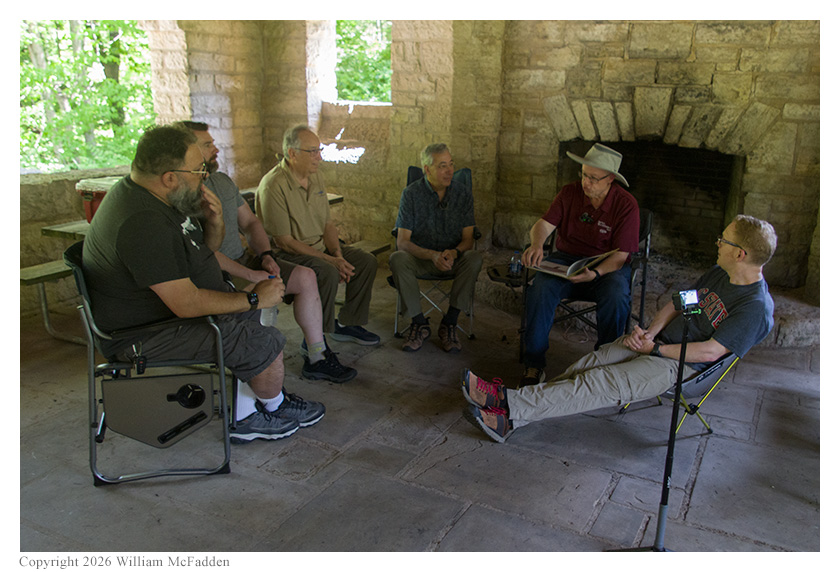
Paul reads the book "Stuck" by Oliver Jeffers to
the Ham Radio Workbench crew; this recording
is to appear in an upcoming HRWB podcast.
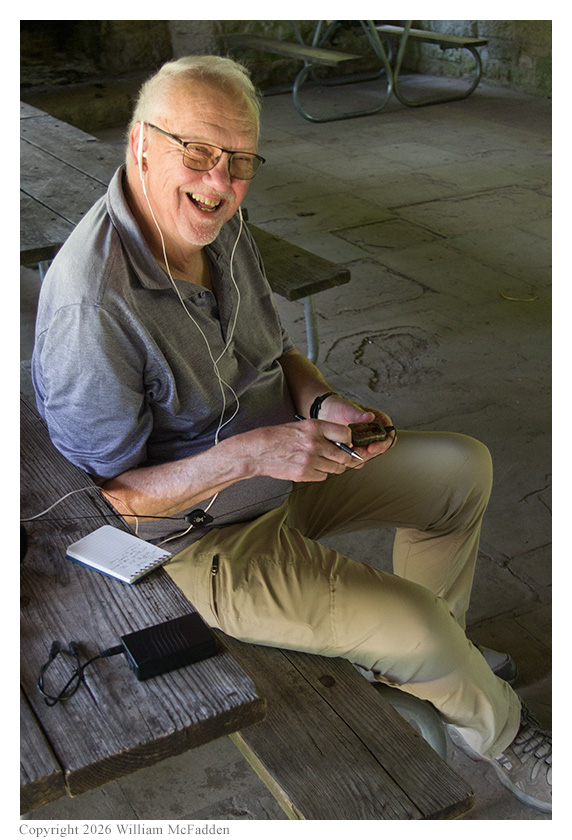
Dan operating a KH1 station
in picnic-table mode.
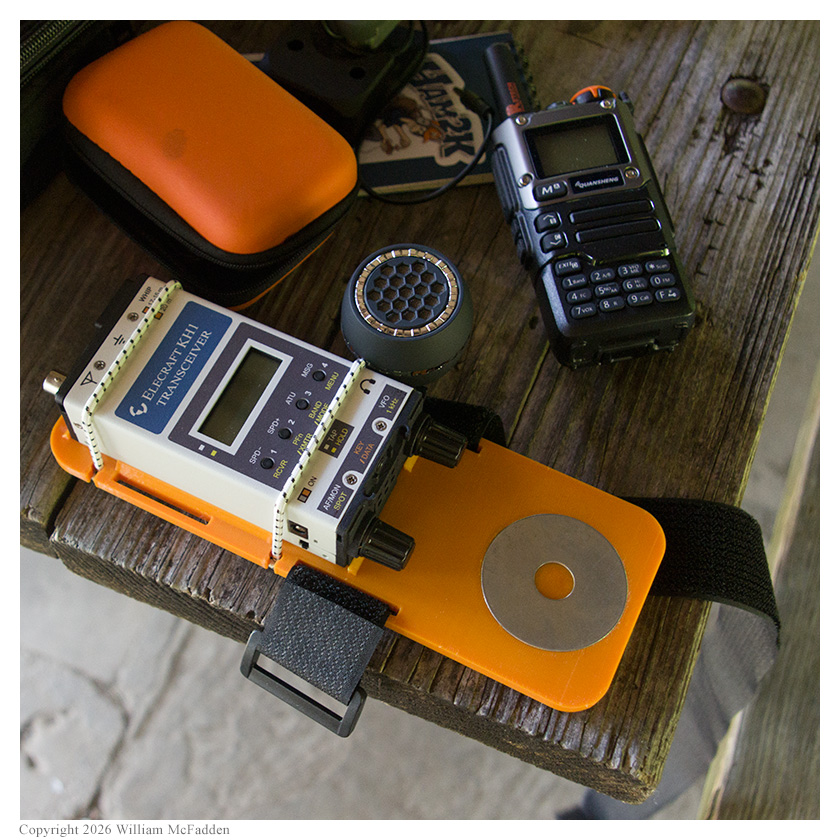
George's Elecraft KH1 station
along with his Quansheng CW HT.
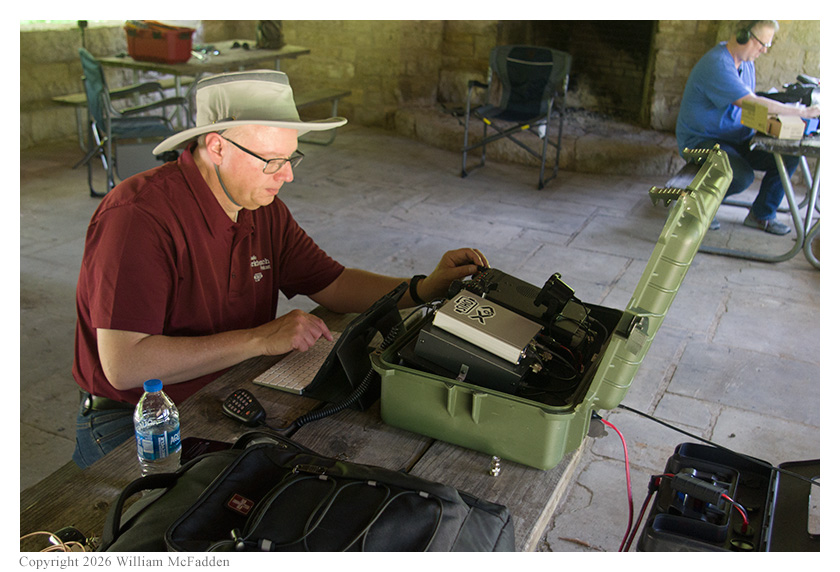
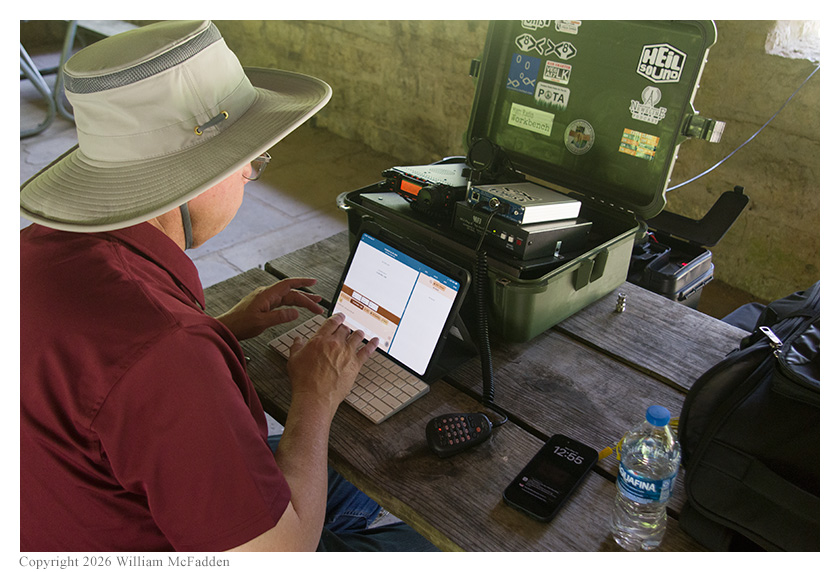
Dan operates his Yaesu station.
Garrett operates his ICOM IC-705
into a Spooltenna Ultra antenna.
Alan operates George's KH1 station.
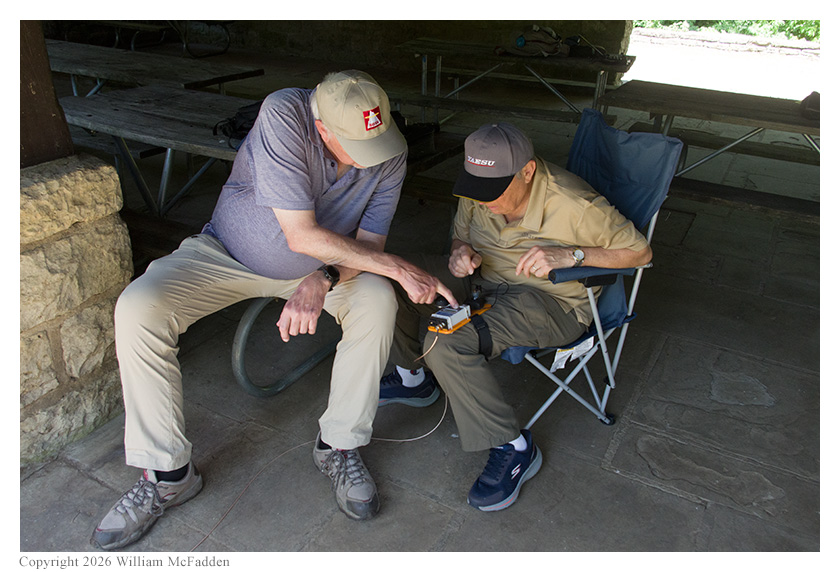
Dan and Alan work with George's KH1 station.
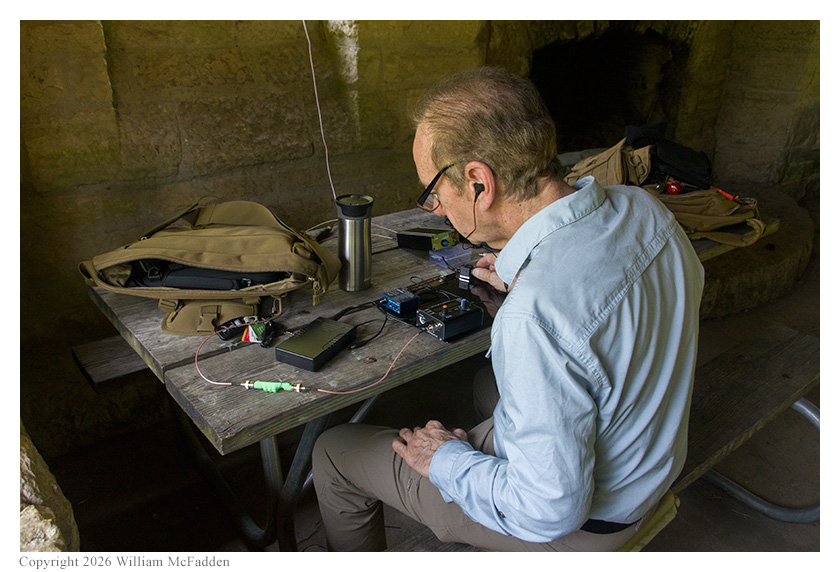
Len operates his usDX SDR station.
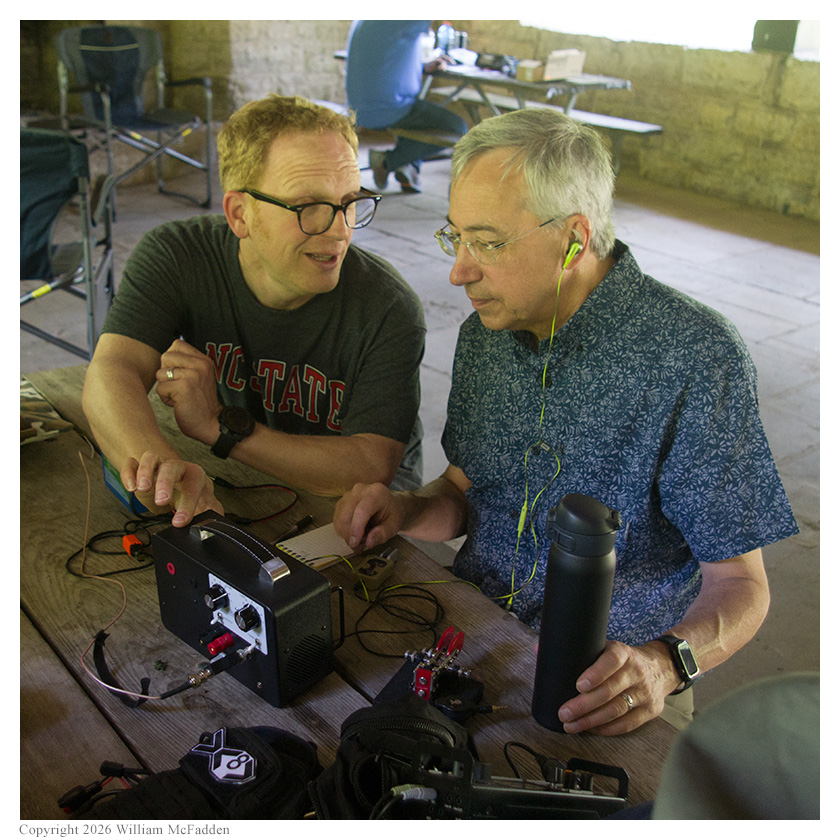
George operates Thomas's Penntek TR-45L.
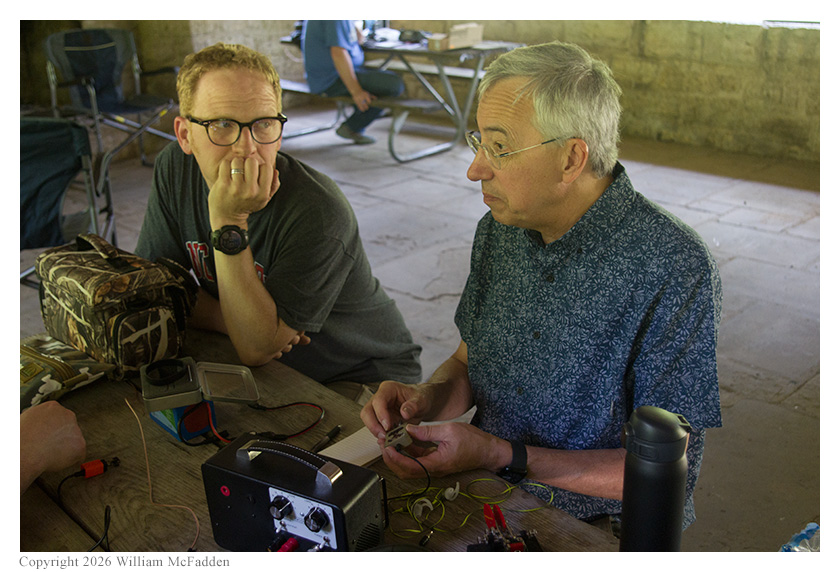
George tries out one of Thomas's CW paddles.
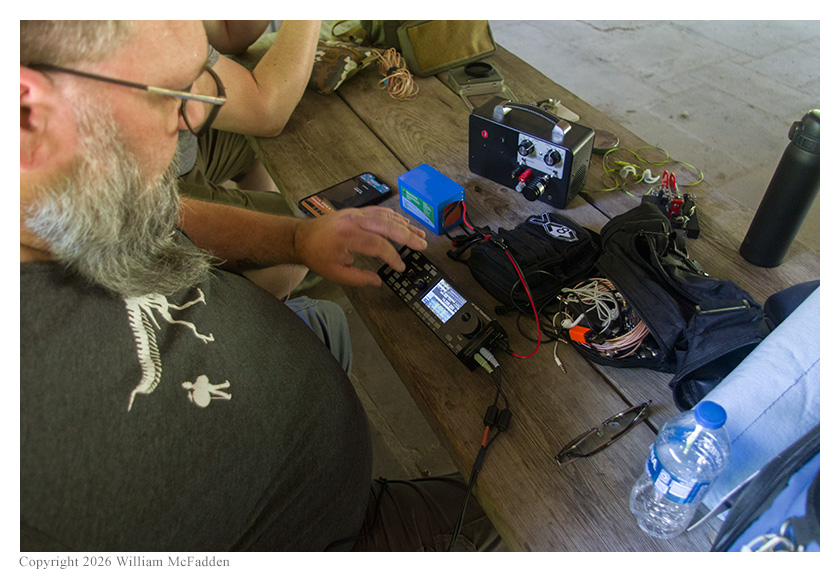
Mark operates his mcHF station.
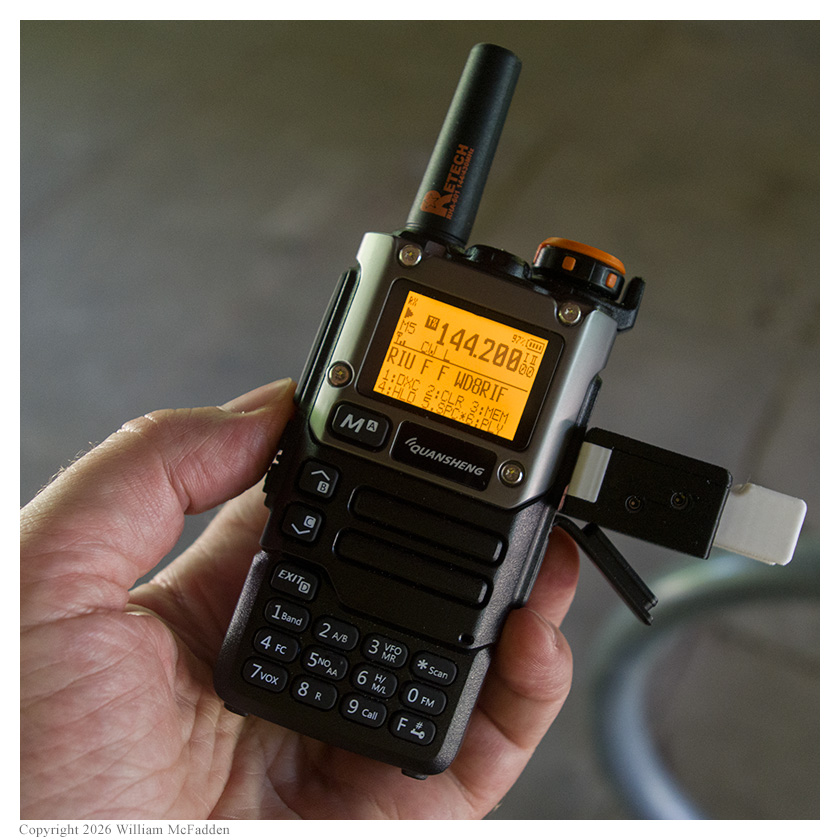
Eric tries George's Quansheng on 2m CW.
Thomas operates Mark's mcHF station.
In all, Eric made seventeen QSOs, eleven of which were local P2P QSOs. All of Eric's QSOs were CW and were made with five watts output or less.
Following tear-down, everyone repacked their cars, made their goodbyes, and left. Most of the participants were to head to the airport for flights west, but some were driving all the way home.
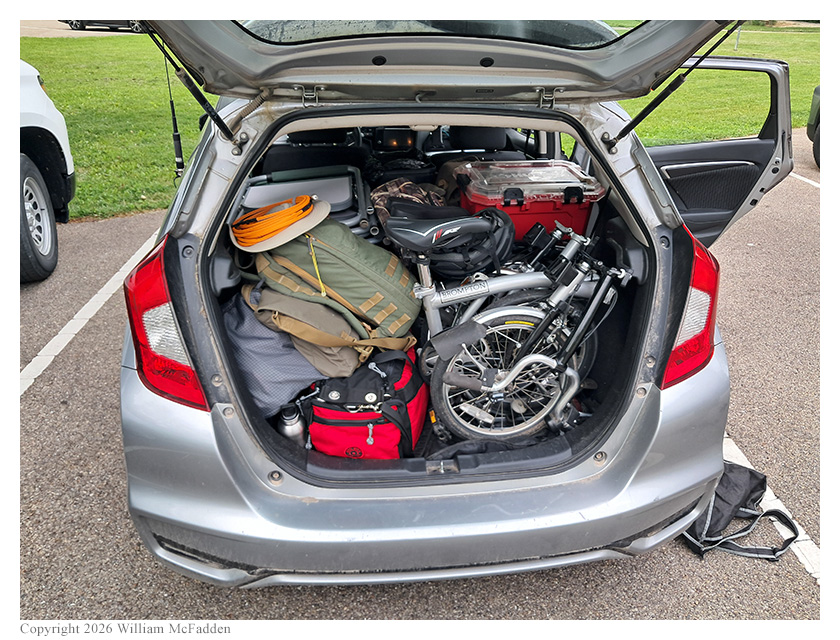
Eric's Honda Fit, packed to the gills
with Eric's and Thomas's stuff.
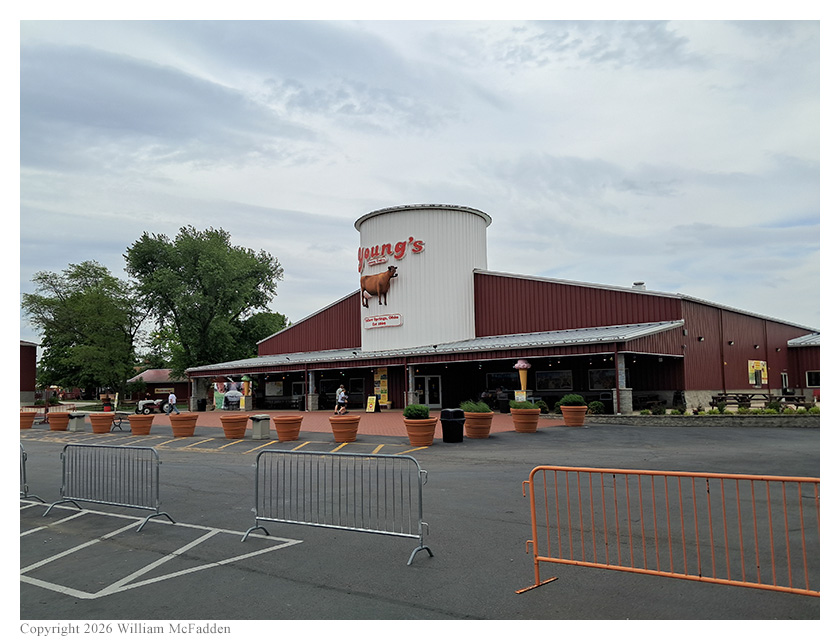
Len, Eric, and Tom had a late lunch and ice cream
at Young's Jersey Diner before going their own ways,
Len to Pickerington and Thomas and Eric to Athens.
Eric also submitted his log to the World Wide Flora and Fauna in Amateur Radio (WWFF; link) program.
(return)