- Eric on a Brompton; photo by Thomas Witherspoon
- Approaching the railroad overpass

by William Eric McFadden
From the Dayton Aviation Heritage NHP website:
-
Dayton Aviation Heritage National Historical Park was established to honor the lives and achievements of poet and author Paul Laurence Dunbar and aviation pioneers Wilbur and Orville Wright. Through perseverance and dedication Orville, Wilbur and Paul were able to overcome obstacles in their lives and leave their respective marks on history.
The Huffman Prairie Interpretive Center is one of two visitor centers operated by the park in Dayton, Ohio. This center is located northeast of downtown Dayton, next to the Wright Patterson Air Force Base and the National Museum of the Air Force.
From the North Country Trail Association website:
-
The North Country National Scenic Trail is the longest in the National Trails System, stretching 4,800 miles across eight states from North Dakota to Vermont, traversing forests and farmlands, remote terrain and nearby communities. Whether you’re looking to day-hike a few miles or plan a longer overnight backpacking trip, a multitude of diverse landscapes and hiking opportunities are waiting for you.
From the National Museum of the United States Air Force Museum website:
-
[T]he National Museum of the United States Air Force collects, researches, conserves, interprets and presents the Air Force's history, heritage and traditions, as well as today's mission to fly, fight and win ... air power anytime, anywhere to a global audience through engaging exhibits, educational outreach, special programs, and the stewardship of the national historic collection. With our educational outreach, we motivate, educate, and inspire youth interest in the United States Air Force (USAF) and science, technology, engineering, and math (STEM). The statutory duties delegated by the Secretary of the Air Force (SECAF) are accomplished on behalf of the American People.
We are the keepers of their stories.
Pictures
- Outbound from Eastwood MetroPark:
- Dayton Aviation Heritage NHP:
- Inbound from Dayton Aviation NHP:
- National Museum of the United States Air Force:
Description
On Sunday, May 17, 2026, two members of the Southeast Ohio Radio Adventure Team performed successful bicycle-portable activations of Dayton Aviation Heritage National Historic Park and North Country National Scenic Trail in Ohio as part of the Parks on the Air (POTA; link) program.
While in the Dayton area for Four Days in May (FDIM, info) and Hamvention (info), Eric McFadden, WD8RIF, and Thomas Witherspoon, K4SWL, performed the bicycle-portable activations, riding from Eastwood MetroPark to the Huffman Prairie Flying Field Interpretive Center via the Mad River Trail and the Huffman Prairie Bikeway on Brompton folding bicycles. Tom performed an activation of Dayton Aviation Heritage National Historic Park. Eric performed a two-fer activation of Dayton Aviation Heritage National Historic Park and North Country National Scenic Trail. Tom and Eric were accompanied by Len Touth, W8VQ, who had purchased a folding mountain bike just for this outing; Len also performed the two-fer activation.
Eric had been trying for years to get Tom to do bicycle-portable POTA activations. He finally succeeded on May 12, when he and Tom performed bicycle-portable POTA activations of Lake Alma State Park. For that outing, Tom rode one of his made-in-England Brompton A-Line folding bicycles and Eric rode his new Surly Preamble bicycle. While they were making their plans for FDIM and Hamvention, Eric had suggested they do a bicycle-portable POTA two-fer activation of Dayton Aviation Heritage NHP and NCNST. Tom readily agreed but insisted that Eric ride Tom's second Brompton folding bicycle. Eric agreed to this stipulation and the plans were finalized. When Eric informed Len, who is also a cyclist, of the planned bicycle-portable activation, he surprised Eric by immediately buying himself a folding mountain bike, albeit an inexpensive one, instead of trying to take one of his conventional bicycles to Dayton.
While planning the route, Eric considered several trails but settled on a ride north on the Mad River Trail from Eastwood MetroPark, turning east onto the Huffman Prairie Bikeway, to the Huffman Flying Field Interpretive Center. Mad River Trail is mostly flat, an important consideration because both the Bromptons are equipped with three-speed hub-gearing. Huffman Prairie Bikeway is actually coincident with North Country National Scenic Trail. Eric knew from previous visits to the Interpretive Center that it would be easy to set up stations within Dayton Aviation Heritage NHP within 100' of North Country National Scenic Trail. (He had done that exact thing twenty-four times during National Parks on the Air in 2016.)
The trio somehow managed to stuff all three folding bicycles, their radio gear, and themselves into Eric's small but mighty Honda Fit, and they arrived at Eastwood MetroPark about 1330 UTC. After a bit of exploring to determine exactly where they would access Mad River Trail, they parked, unloaded the bicycles from the car, unfolded the bicycles, loaded their gear onto the the bicycles, did a little bit of photography, and began their ride at 1353 UTC.
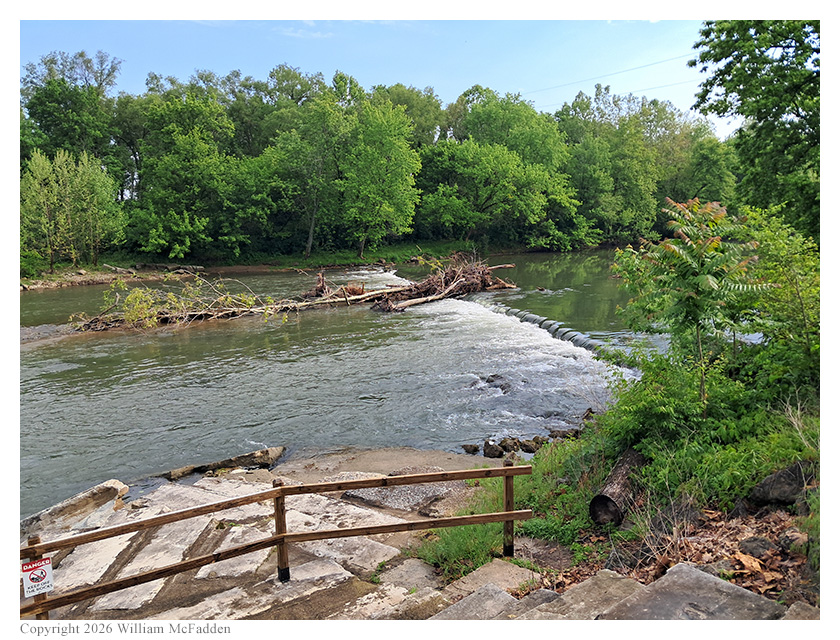
Mad River at Eastwood MetroPark.
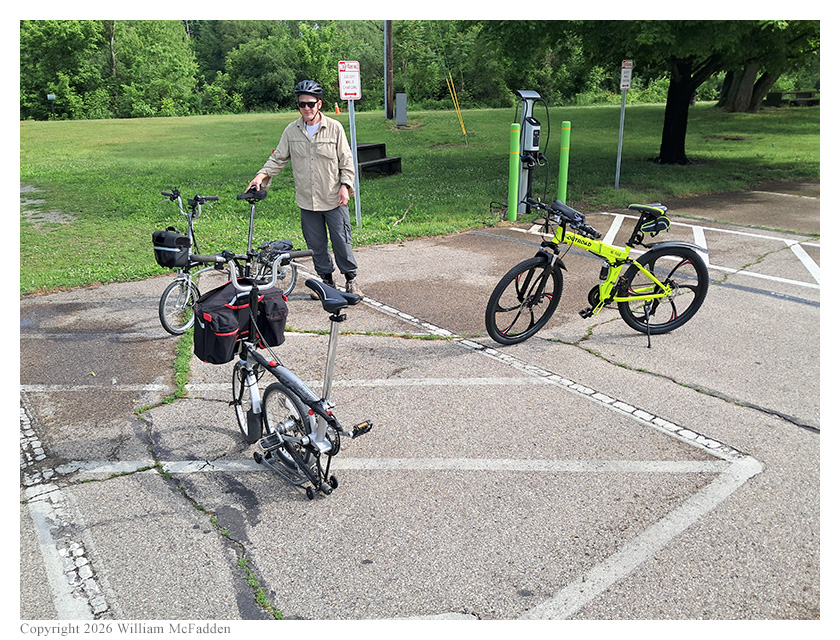
Tom poses with three folding bicycles. He was to ride
the black Brompton. The silver Brompton is folded
into the "parked" configuration, and would be ridden by
Eric. Len would ride the yellow folding mountain bike.
The ride took forty-three minutes, including a detour onto the causeway at the end of Mad River Trail and the junction with Huffman Prairie Bikeway, and measured 5.88 miles. The trail was lovely in parts, particularly the section in and near Eastwood MetroPark, and the three-speed Bromptons handled the switchback-climb to the causeway without difficulty. For a bit of added fun, the trio reached the railroad overpass just as a long freight train thundered through underneath.
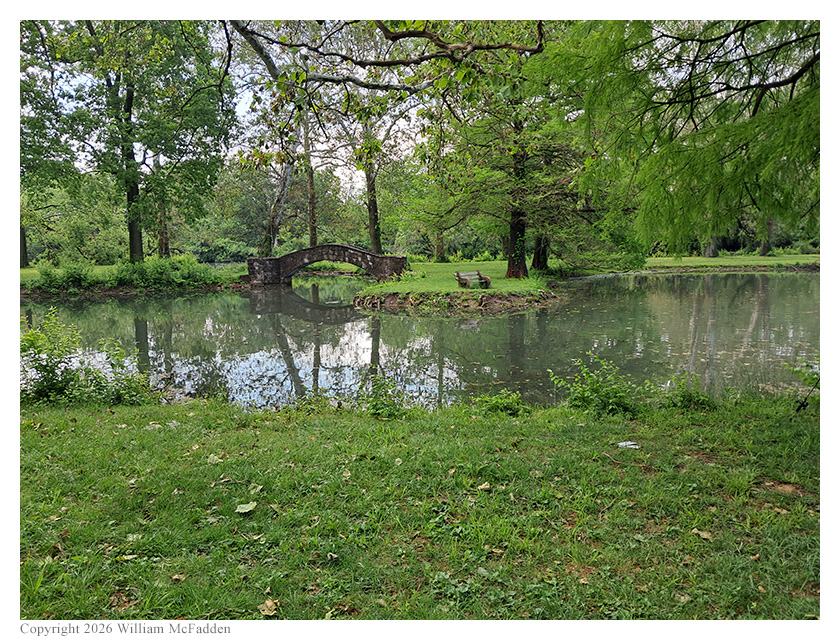
A rustic pedestrian bridge in Eastwood MetroPark.
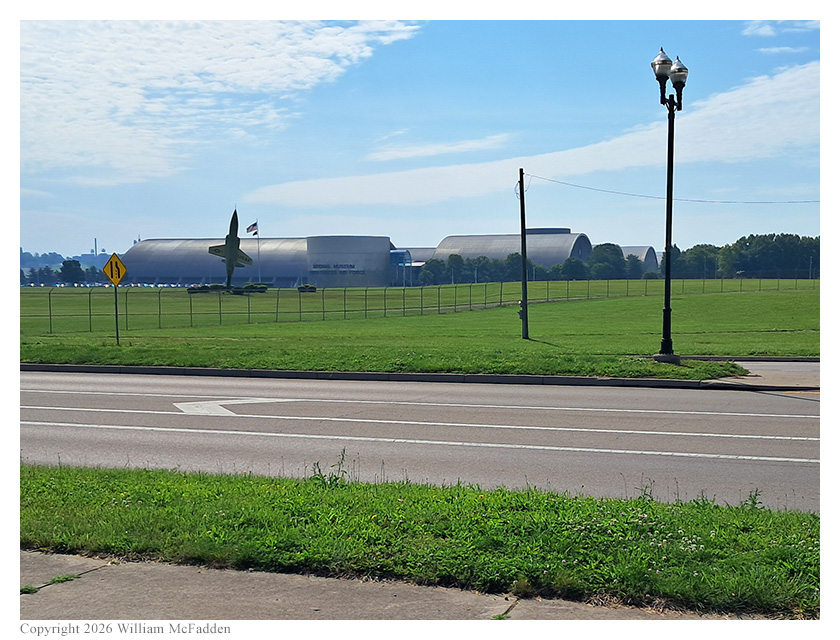
The National Museum of the United States
Air Force as viewed from Mad River Trail.
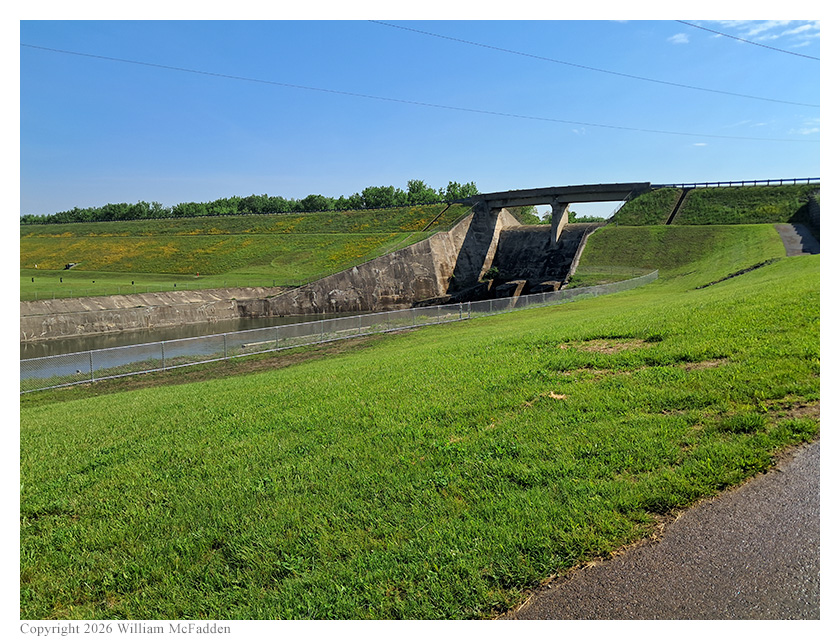
Approaching the Huffman Reservoir Causeway.
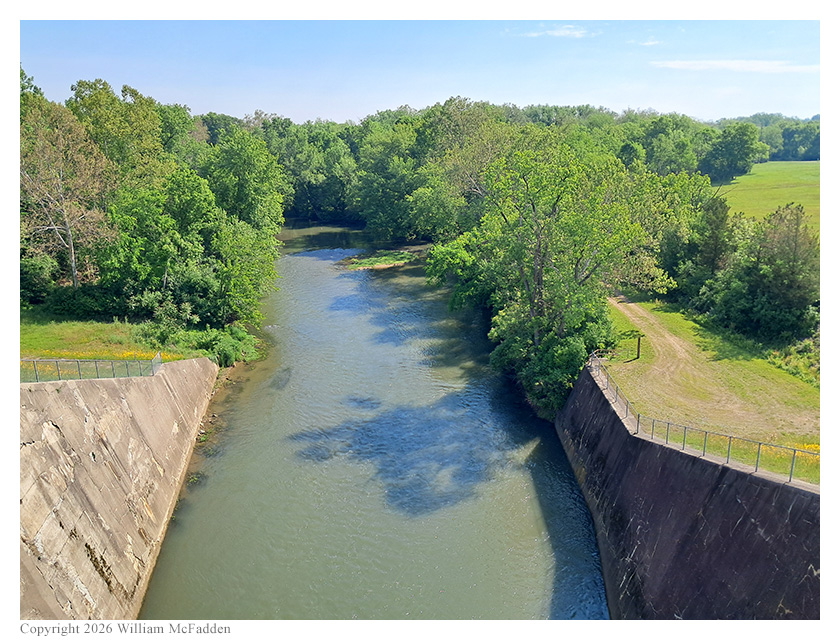
Mad River viewed from atop the Huffman
Reservoir Causeway, looking north/east...
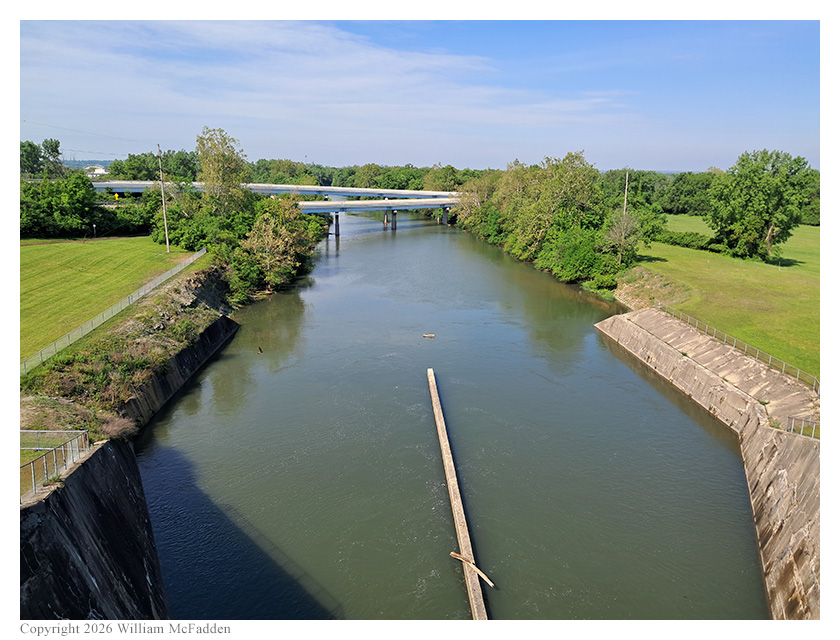
... looking south/west...
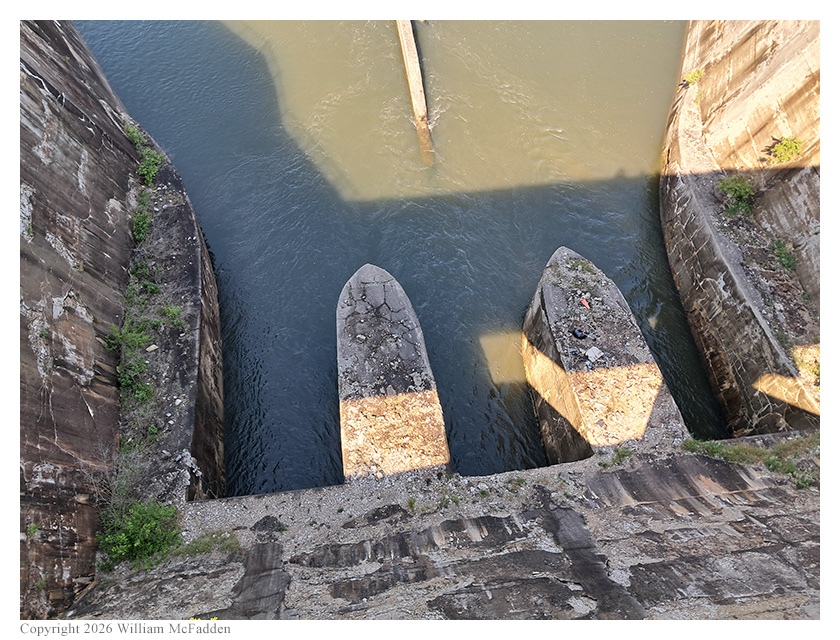
... and looking straight down on the western side.
Upon reaching Huffman Prairie Flying Field Interpretive Center, the three continued their ride up the hill to the Interpretive Center, Wright Brothers Memorial, and overlook, and this turned out to the steepest climb the trio were to encounter on their ride. Unfortunately, the Interpretive Center is closed on Sundays, but the Wright Brothers Memorial and the overlook were both worth seeing.
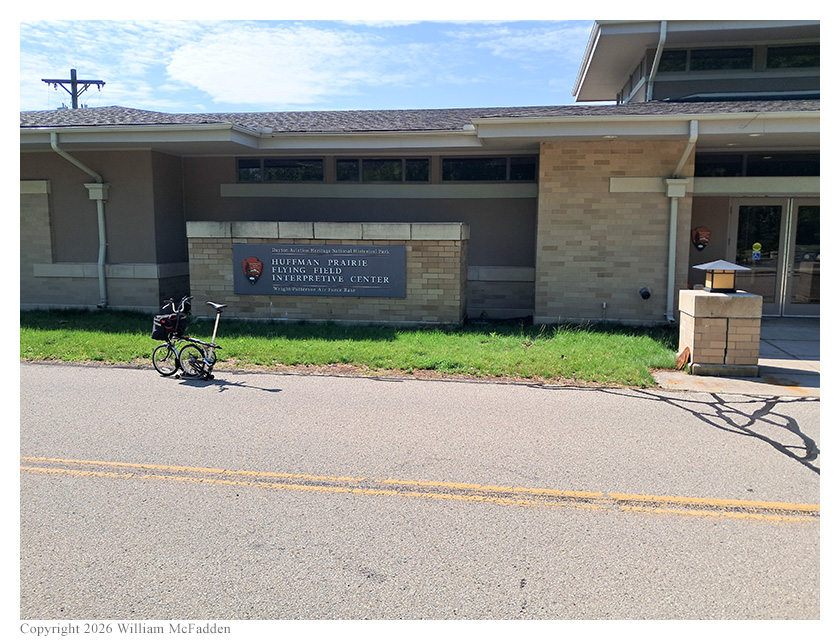
The Huffman Prairie Flying Field Interpretive Center.
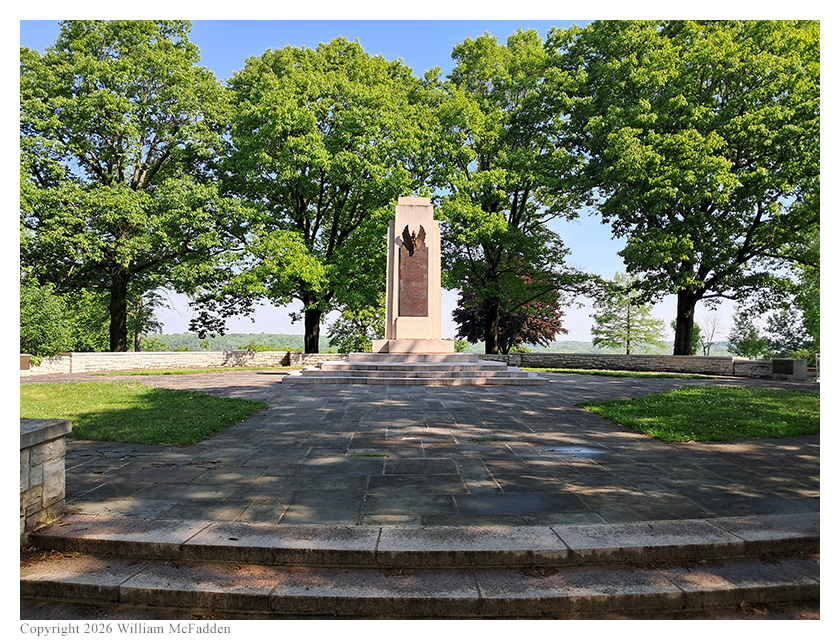
The Wright Brothers Memorial.
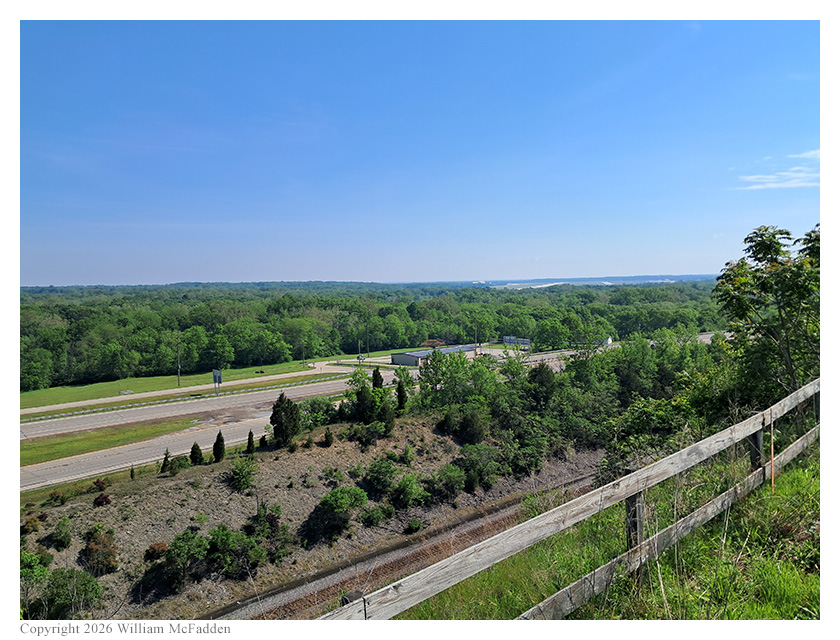
The view from the Overlook; Wright-Patterson Air
Force Base runways are visible on the right.
Tom decided to remain on top of the hill, forsaking the two-fer, and do an activation of just Dayton Aviation Heritage NHP. After Len and Eric descended the hill to the two-fer, Tom set up his Elecraft KH1 station on a picnic table and no trouble whatsoever getting the ten QSOs required for a valid activation.
Len and Eric coasted back down the hill to where the Dayton Aviation Heritage NHP and North Country National Scenic Trail meet.
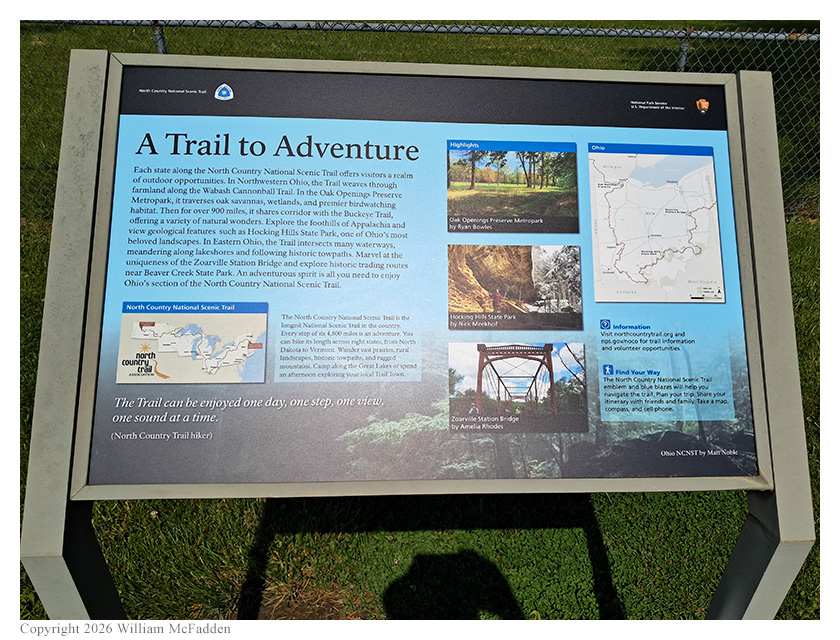
The NCNST descriptive sign at the Huffman Prairie Flying Field gate...
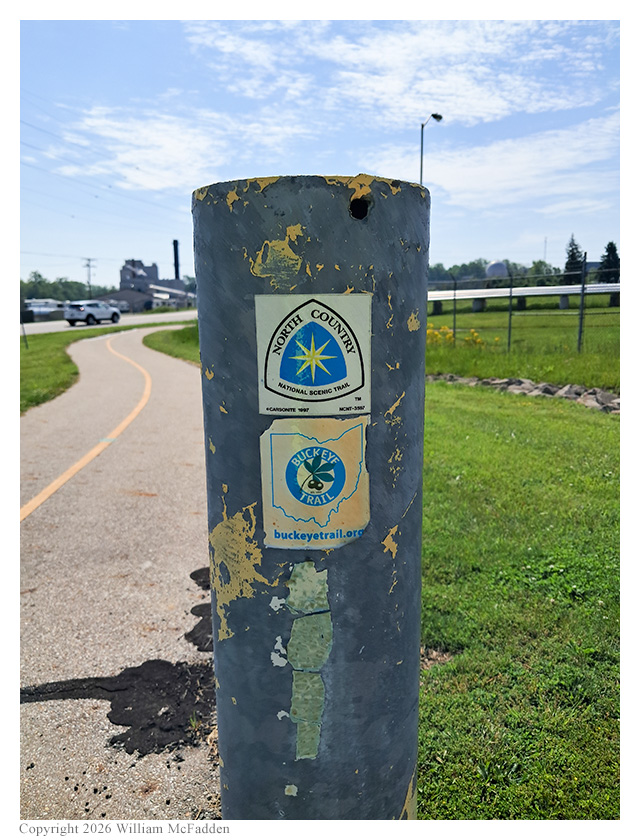
... and a NCNST trail marker on the Huffman Prairie Bikeway.
Len chose a large shade tree to sit under, deployed a 40m end-fed halfwave antenna, and began his operation with his DL2MAN (tr)uSDX transceiver (link).
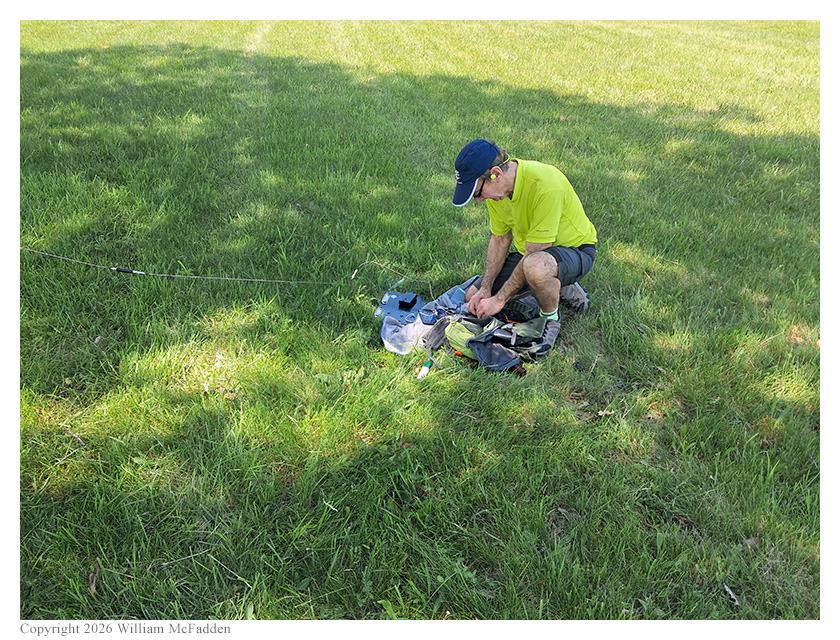
Len working with his (tr)uSDX station.
Eric chose a shade tree at a distance from Len, deployed the ad hoc 35' end-fed random wire antenna from his KH1 Micro Travel Kit as an inverted-L, running straight up from his KH1 on the ground to a low branch, and then sloping up to the top of his Goture Red Fox Super Hard 720 carbon-fiber mast held upright on a spike, placing a single 13' counterpoise wire directly on the ground. Plugging in his Whiterook MK-33 paddle and Sony earbuds, Eric was on the air at 1458 UTC.
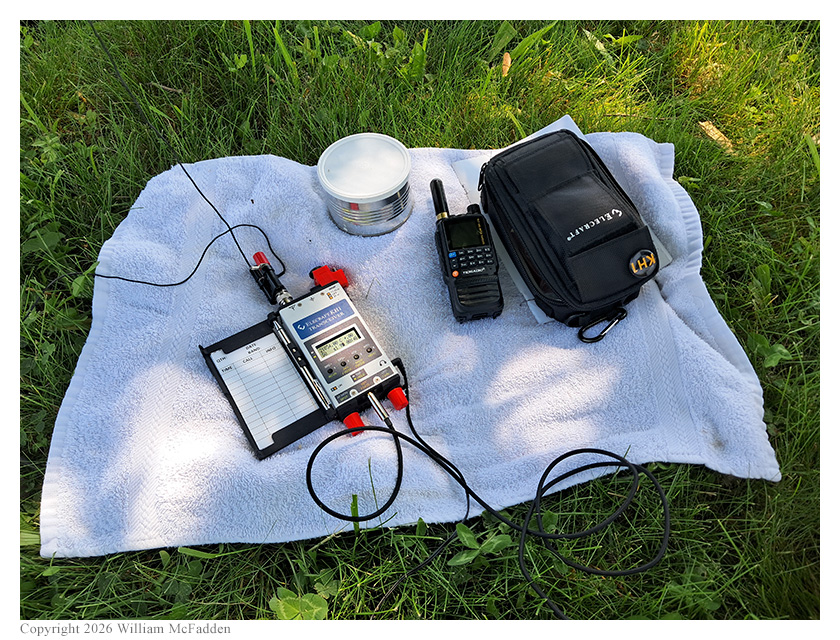
Eric's Elecraft KH1 station deployed on a towel.
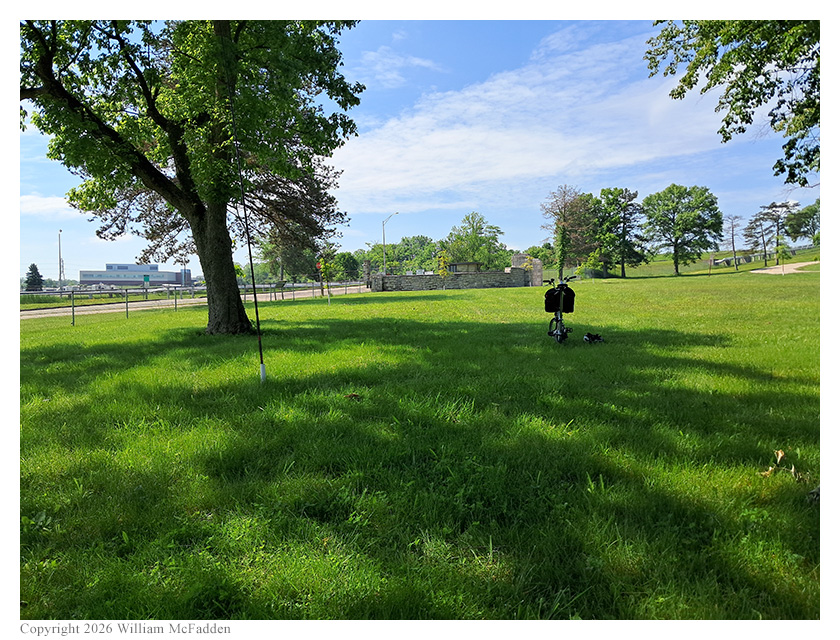
Eric's mast and (invisible) antenna; the
parked Brompton bicycle kept falling
over on the soft, damp ground.
Tom had told the others that he would be starting his operation on 40m, so Eric's first QSO was a Park-to-Park (P2P) QSO with Tom on 40m which came at 1459 UTC.
Finding himself a clear frequency on 30m to run, Eric began calling "CQ POTA" and self-spotted himself on POTA Spots (link). His first QSO in this run came at 1503 UTC with KF9VV in Wisconsin. Repeated calls of "CQ POTA" failed to result in any responses until 1512 UTC, when he was called by Tom for a second P2P QSO.
Eric had been watching POTA Spots to see where Len was operating but failed to see any spots for him. Coordinating via 2m HT, Eric learned that Len was on 20m, and at 1514 UTC they completed a two-fer P2P QSO.
Eric now saw that Tom had moved to 15m, and at 1517 UTC they completed another P2P QSO.
Since Tom had left 40m, Eric found himself a clear frequency to run on that band, began calling "CQ POTA", and self-spotted himseld on POTA Spots. At 1521 UTC, he completed a QSO with WB8DD in Ohio. Repeated calls of "CQ POTA" failed to produce any more responses.
At 1528 UTC, Eric noticed that Tom was now on 17m, and he was able to make yet another P2P QSO with him.
Eric returned to 40m and tried on that band to slog his way to a valid activation. At 1530 UTC, he had a QSO with VE3KZE in Ontario. At 1534 UTC, he had a QSO with AB0BM in Iowa. At 1548 UTC, he had a QSO with W4TRA who was activating Mayo River State Park (US-2743) in North Carolina; this QSO was his tenth, and gave him a valid activation. At 1552 UTC, he had a QSO with KQ4PAK in Virginia. At 1554 UTC, he had a QSO with W4JM in South Carolina.
During his slow slog on 40m, Eric learned that Len had been entirely unsuccessful at spotting himself on POTA Spots. While his rig's memory keyer was dutifully making "CQ POTA" calls that were going unanswered, Eric tried about six times to spot Len to POTA Spots, the spot failing to work each time. Eventually, Eric found that Len's spot was appearing, but it wasn't appearing when spots were filtered by "CW". Eric was finally able to attempt another spot, specifying "CW" in the comment field, and this time the spot eventually appeared. Once he was spotted, Len was able to make a few QSOs, but he also found that his multi-band (tr)uSDX was really working on just a single band, 20m, a band that had proven to be spectacularly unproductive on this particular day. When Tom rode down the hill on his Brompton following his completed activation, he handed his KH1 to Len and, with it, Len and Eric were quickly able to complete two-fer P2P QSOs on 40m, 30m, 17m, and 15m, validating Len's activation.
In all, Eric made sixteen QSOs in a bit over an hour of on-air time. Most of these QSOs were P2P QSOs with Tom and Len. All of Eric's QSOs were CW and were made with five watts output.
Tom having already torn down his station and packed his bicycle, Len and Eric tore down their stations and repacked their bicycles. While dropping his ad hoc 35' EFRW, Eric managed to get get the 2' extension disconnected and stuck in the tree, but after several minutes of work with the Goture Red Fox Super Hard 720 mast, he was able to knock the extension out of the tree.
The bicycle ride back to Eastwood MetroPark was uneventful, and a strong headwind marred the fun only slightly.
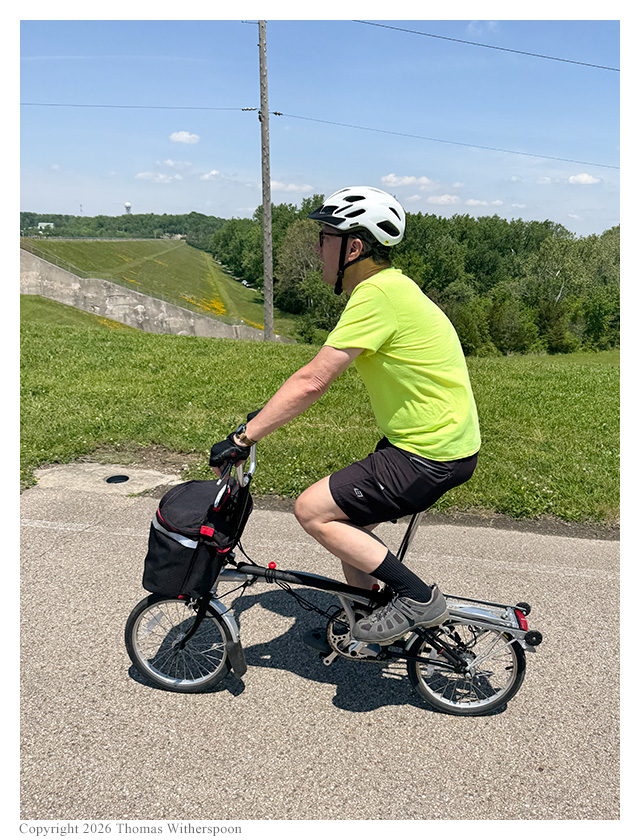
Eric riding Tom's Brompton;
photo by Thomas Witherspoon.
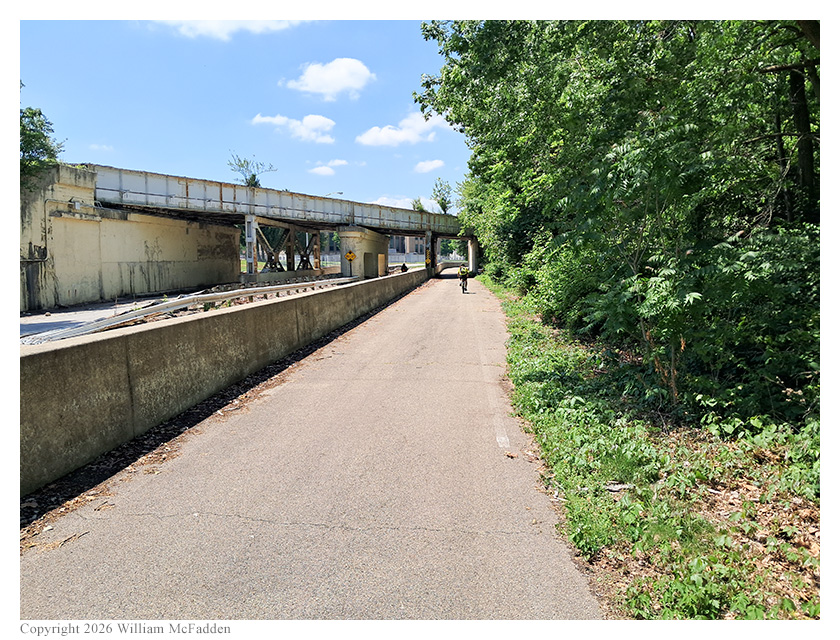
The Mad River Trail passes under the railroad
overpass; this is the same railroad line that
the Huffman Prairie Bikeway passes over.
Just beyond this point, on the left, one passes
the National Museum of the United States Air Force.
Once back at Eastwood MetroPark, the three changed out of their riding clothes, unloaded and folded their bicycles, and stuffed everything back into the Fit before beginning the very short drive to the National Museum of the United States Air Force. Tom search for a nice place to have lunch near the museum having been entirely unsuccessful, the decision was made by default to eat lunch at the Valkyrie Café in the museum.
After lunch at the Valkyrie Café, the three started what they knew would be an abbreviated tour of the museum—the museum really needs a full two days to see everything and they had only a few hours left before the museum was to close. Even so, it quickly became apparent to each of the three that they were very tired. Partially, this fatigue might have come from their bike ride, but the ride was short and not strenuous. Most of the fatigue undoubtedly came from having spend nearly all of Friday and Saturday standing and walking at Hamvention, and the fatigue was just catching up with them at the absolutely huge National Museum of the United States Air Force.
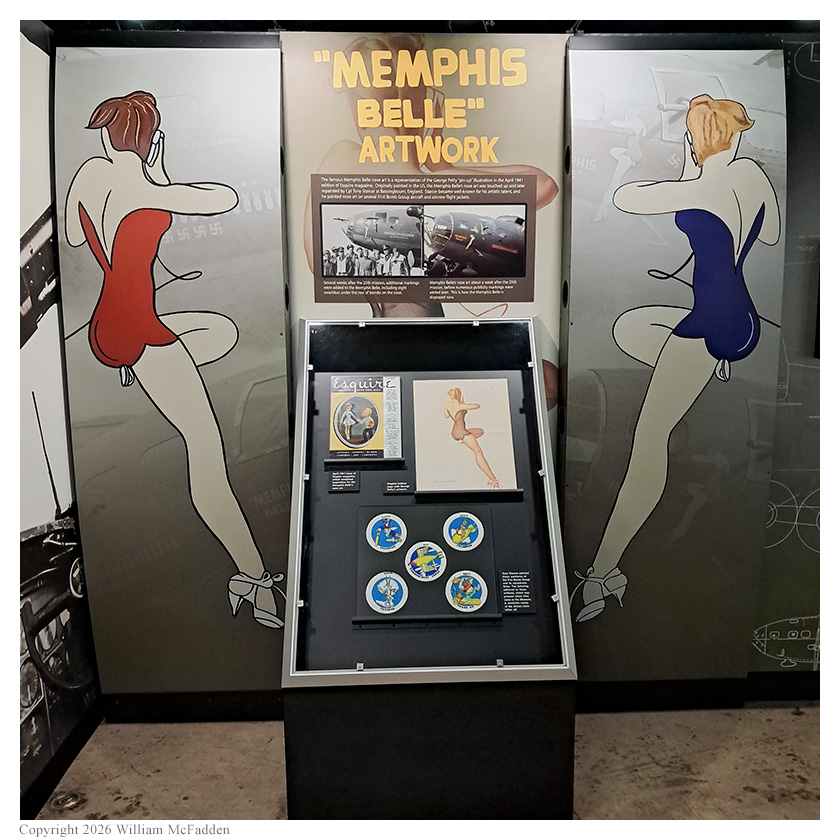
The three succeeded in walking through the entirety of the WWII wing, spent considerable time in the gorgeous "Mephis Belle" display, and they saw several new displays including an interactive ground-attack/strafing simulator built into an A-26 Invader fuselage. They then proceeded almost directly to the fourth hanger, so Tom could see his beloved XB-70 Valkyrie, straying only slightly into the Cold War, Global Reach, and Space wings. Upon reaching the fourth hanger (and the Valkyrie) all three realized they were utterly knackered, and they gave up on the idea of touring the museum as a lost cause, and they slowly walked directly back to the car.
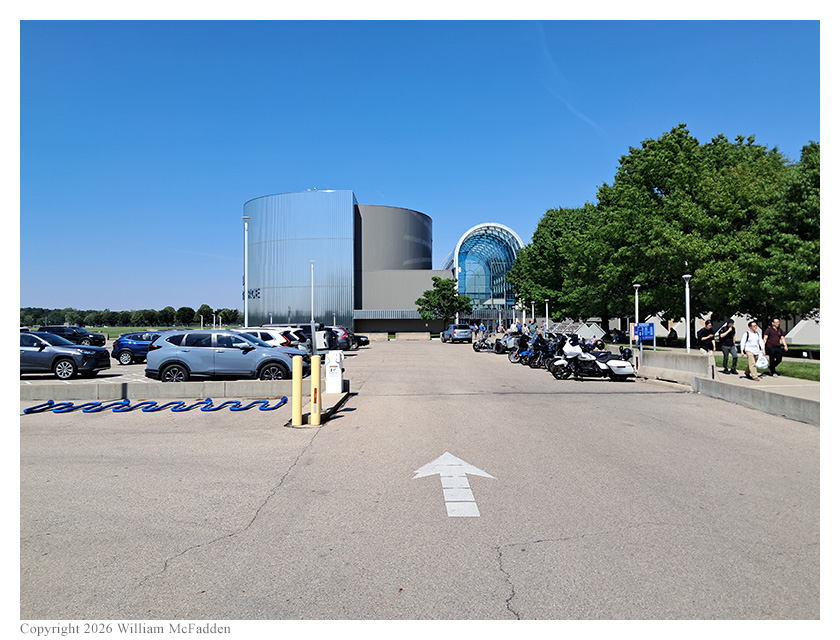
An outside view of the National Museum
of the United States Air Force.
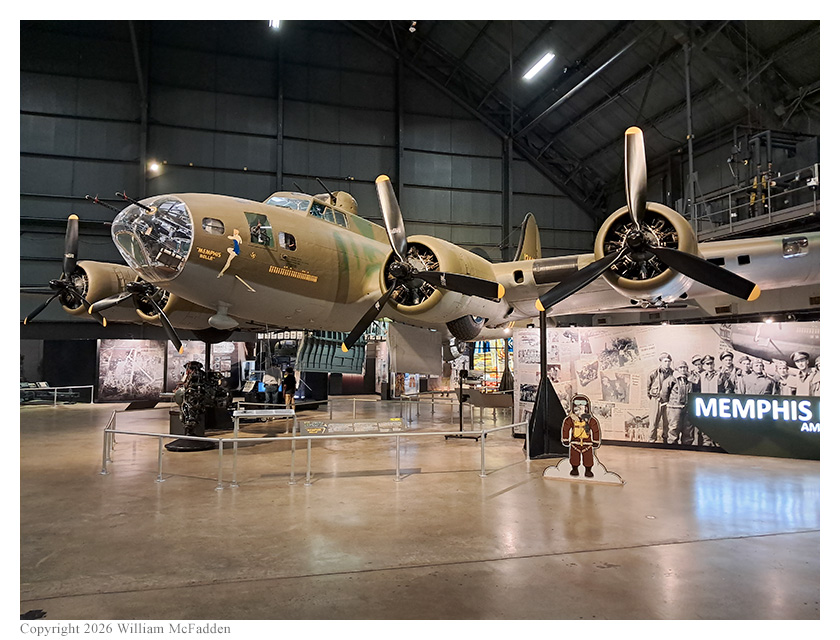
Historic B-17F Flying Fortress
"Memphis Belle", in restored splendor.
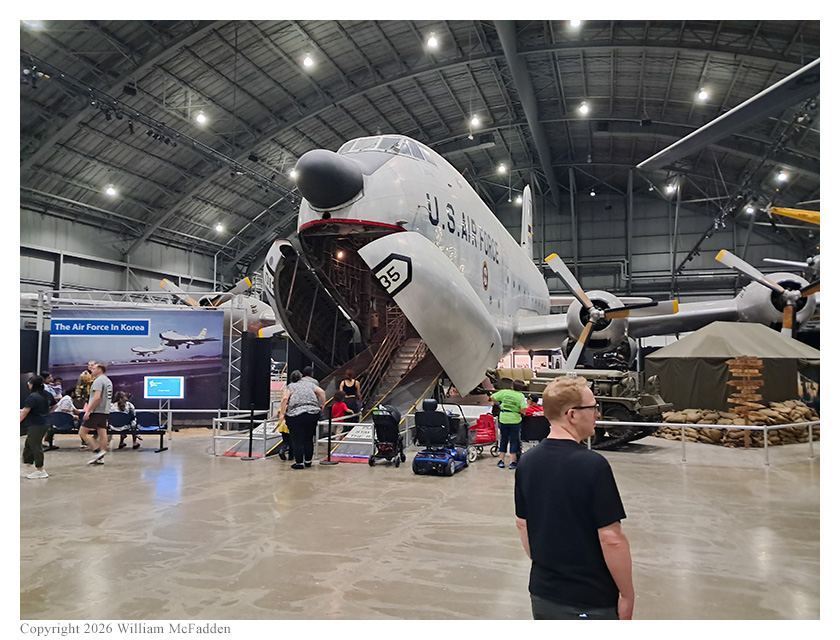
C-124 Globemaster II; Eric's father
served as a radio maintainer on the C-124,
and flew with them to Germany,
Greece, New Zealand, and Antarctica.
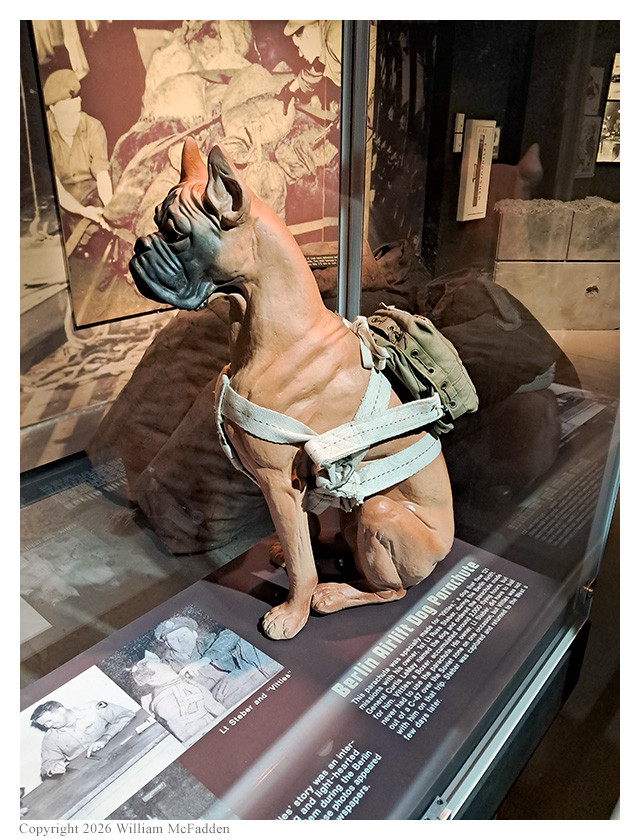
A parachute made for "Vittles," a dog
that flew 131 missions with his owner
during the Berlin Airlift (more).
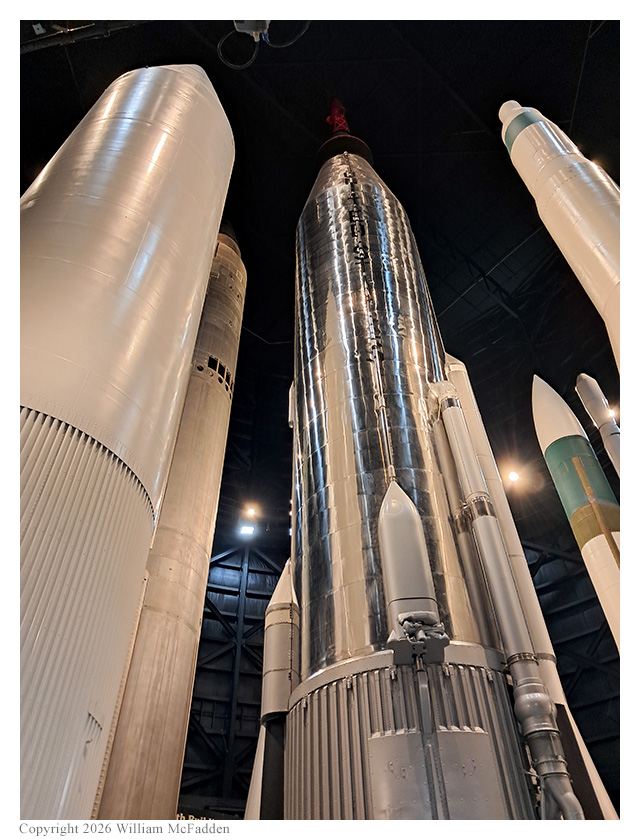
Nuclear missiles in the Missile Gallery.
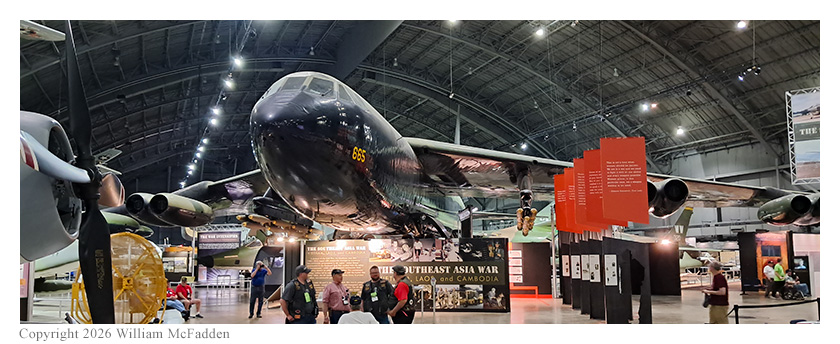
B-52D Stratofortress.
Eric also submitted his log to the World Wide Flora and Fauna in Amateur Radio (WWFF; link) program for Dayton Aviation Heritage NHP, KFF-0732.
(return)